Tag: land development

  • A Legend or an Out-of-Work Bum?

    A Legend or an Out-of-Work Bum?

    I’m an old guy. One of the first movies I remember seeing was Smokey and the Bandit. Late 70s, back when Burt Reynolds was on his first hairpiece.

    There’s a scene where the Burdettes walk up on the Bandit sleeping in a hammock. Little Enos looks at him and says, “Seems like a legend and an out-of-work bum look a lot alike, daddy.”

    It’s a funny line, but there’s a lot of truth in it. A lot of things in life look almost identical from the outside if you don’t know what you’re looking at.

    A legend and a bum. A disciplined person and someone who just got lucky. A successful business owner and someone who “doesn’t seem to work very much.”

    Land can be the same way.

    Two tracts can look almost identical driving down the road. Same pasture. Same fence. Same trees. But one might be sitting in the path of development while the other isn’t.

    One might have access to a nearby sewer line that actually works for the property. Sewer flows downhill, as they say. The other might technically be “near sewer,” but at the wrong elevation to connect without a lift station.

    Or they may be served by different water providers, only one of which has the capacity to add new connections.

    From the road they look the same.

    Until you understand what’s actually going on.

    That’s one reason land prices can surprise people. They’re looking at the grass. Someone else is looking at the context.

    Sometimes a legend and an out-of-work bum really do look the same.

    The difference is knowing what you’re looking at.


    PS – Land markets can be a lot like that scene in the movie.

    Two properties can look identical from the road, but the context around them can make a big difference in value.

    That’s what the MBR Land Reality Check looks at. Actual nearby sales, current listings, development pressure, utilities, and the other details that aren’t obvious just driving by.

    It’s still free this month. No obligation and never any pressure to list.

    Sometimes it helps to know what you’re really looking at.


    PPS – If you’re not ready for a Reality Check but enjoy reading about land, markets, and negotiation, you can sign up below and get these posts in your inbox.
    Register to Receive Posts Via Email!

    By submitting, I understand I will receive marketing emails and blog posts from Mike Browning Realty and/or associated companies. Unsubscribe at any time.

  • Assume the Position (in the Poorhouse)

    Assume the Position (in the Poorhouse)

    In the run-up to the 2008 banking crisis, lots of land investors bought future development tracts using bank debt. Which they predictably lost when market appreciation paused and they couldn’t sell their way out of the deals (or refinance them).

    Typically the way it plays out: the bank gets the property back through foreclosure, and then tries to sell it for “what they have in it.”

    The problem is, if it was worth that number, the previous owner would have sold it rather than losing it. Nobody just hands the keys back for fun.

    So the property sits until the bank gets realistic.

    I remember one deal like this in northern Collin County. About 360 acres, if I remember right.

    At the time it was considered “out there.” Not many rooftops, not much heat. And the asking price was still high. It came down a little. And I thought of someone who might be a buyer.

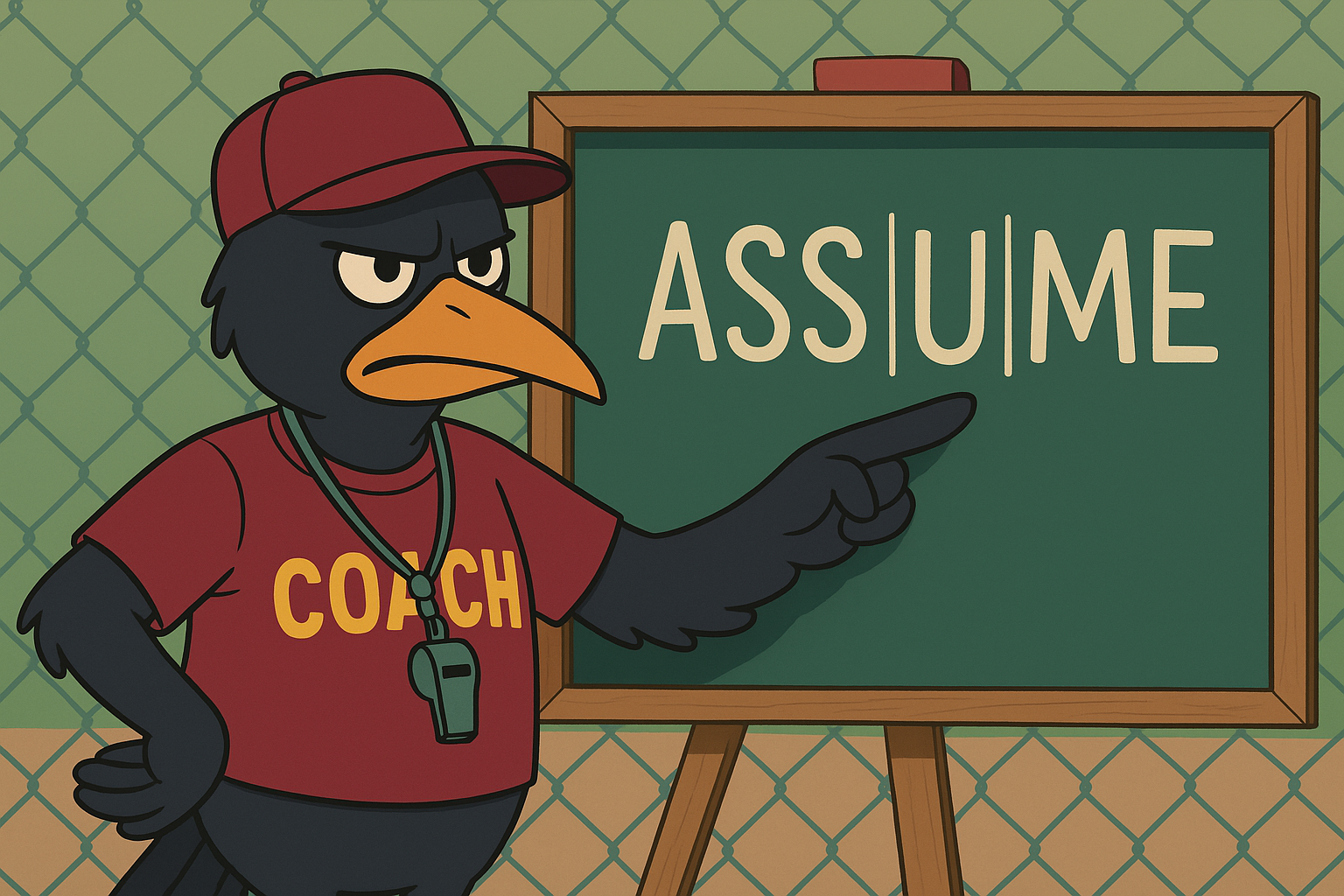
    Then I made the classic mistake.

    I thought, there’s no way he’d be interested at that price.

    So I didn’t call him.

    Didn’t ask.

    Didn’t even give him the chance to tell me no.

    You already know what happened next.

    Next time I checked, ownership had changed. The guy I assumed wouldn’t be interested had bought it.

    By assuming, I cost myself a very healthy commission.

    Now—was I wrong about the price? Maybe, maybe not.

    Doesn’t matter.

    What mattered is I didn’t ask. I didn’t get inside his world. I stayed in mine. I let my assumptions do the thinking for me.

    Jim Camp talks about this in Start With No.

    Don’t assume you know the other side’s situation, pressures, desires, timeline, needs, or reasoning.

    Even if you’re familiar with them.
    Even if you think you’ve seen the pattern before.
    Even if you would feel the same way in their shoes.

    Because you are not in their shoes.

    And you can’t negotiate or sell or advise effectively while standing in your own.

    You have to ask. You have to get curious. You have to go find out what’s real — for them.

    Sometimes that means you hear a quick “no.”

    Sometimes it means you hear something surprising.

    In my case, it would have meant a check.

    I did end up with a good dove hunting spot for a few years, until it got covered up with houses. (It’s not “out there” anymore.) But the lesson was better than the hunting:

    Don’t assume. Ask.

    PS — (here it comes again…)

    I’ve been flogging Start With No and Never Split the Difference all week. I’ll give it a rest after today. (No promises on how long.)

    Maybe you’re tired of hearing it. But if you knew something that would help me and didn’t tell me, would that be right?

    Negotiation touches every part of our lives. Even the boring everyday stuff — where to go for dinner, whether the kids get ready on time, who picks up the dog from the groomer. It’s all negotiation.

    If you get better at it, your life gets easier.

    Sometimes by a little.

    Usually by a lot.

    Get it here:

    (Disclosure: As an Amazon Associate I earn from qualifying purchases. Clicking that link may earn me a small commission, at no extra cost to you.)

  • Avoiding Self-Inflicted Wounds Since 1999

    Avoiding Self-Inflicted Wounds Since 1999

    I’ve been learning from mistakes (mine and others) for a long time

    A client of mine recently went under contract on a tract we think is prime for an acreage lot development. It’s outside any city limits—thankfully—so we’re dealing with the county instead of some slow-moving municipal planning department.

    County processes? Still not fast. But we’re talking 1–2 months for plat approval instead of 5–6. That’s a win.

    Even better, the seller had already started working with an engineer, so we’re ahead of schedule compared to most deals like this.

    But before you do anything with a plat, you have to confirm the local water co-op has capacity to serve the project. If they don’t, you need to know what has to happen to get service.

    That starts with paying $1,000 to their engineer—just for them to look at it. Seems like a few hours of work, right? Nah, they’ll quote you “a few weeks.” Feels like a racket because it kind of is. But here we are.

    Knowing this, I negotiated a 60-day option period for my client to complete due diligence. And in case we needed more time, we got two 30-day extensions built in—for a nominal fee that gets credited toward the purchase price. So, effectively free if the deal closes.

    Now here’s where things really went our way:

    The engineer came back quickly (shocker) and confirmed there is capacity—without needing system upgrades. That never happens. But we’ll take it.

    Phase I of the plat has already been approved. It just needs to be filed, and we can start selling those lots—they don’t require new streets. The rest of the plat is moving toward approval too.

    Now the seller wants to know: “Are you going to skip the extensions and close sooner?”

    I haven’t even asked my client, but I can already tell you the answer—hard no.

    Here’s why:

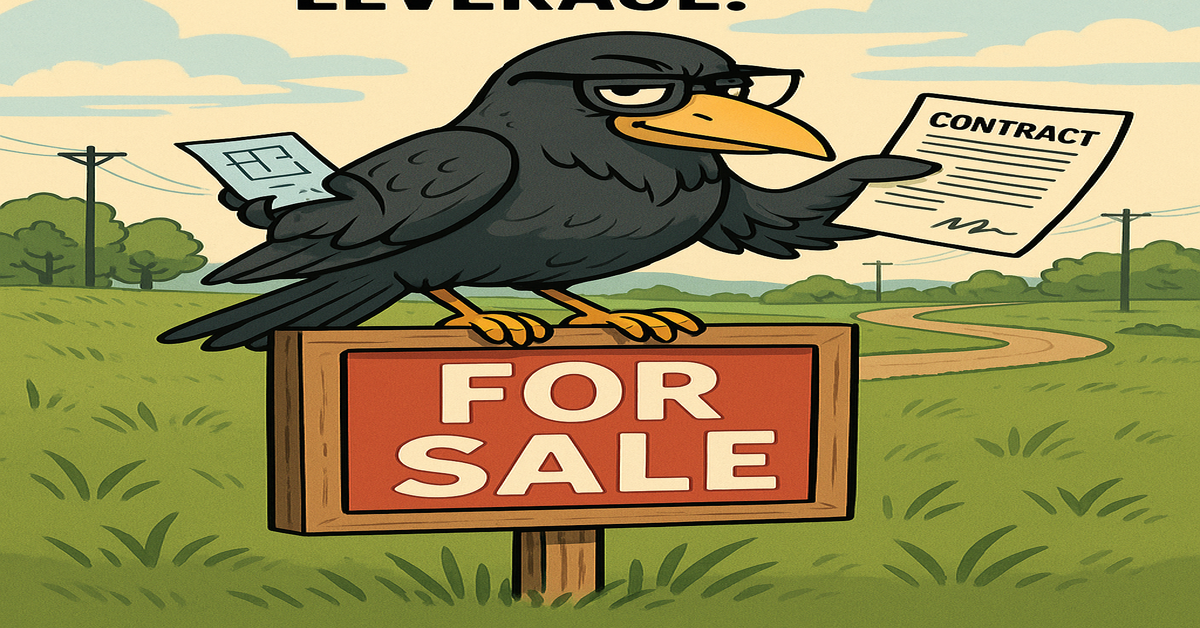
    When you’ve got a property under contract, you control it—without paying for it yet. That means we can start talking to builders and buyers, even write contracts on the lots. We just can’t close those until we officially own the land.

    Meanwhile, the purchase money? Sitting in my client’s bank account, earning interest.

    No brainer.

    When negotiating, I honestly expected the seller to insist that any extension fees be added to the price, not credited toward it. And that it be new money, not just a release of funds already at title. Nothing too crazy—just enough to make it worth our while to forgo an extension we don’t really need. And we’d have agreed to it.

    Why didn’t he? No idea. Maybe he didn’t think it through.

    Why didn’t I point it out? I’d have been breaking my fiduciary duty to my client. Plain and simple. It’s my job to get my client then best deal, not the other way around.

    So here are two takeaways:

    1. If your contract gives a buyer extension options, assume they’ll use every single one and close on the last day possible. That’s just smart business on their part.
    2. If you’re not experienced negotiating land contracts, there’s a good chance you’ll put yourself in a non-ideal but avoidable situation. This can cost you time, money or both.

    Having the right person on your side matters. Not every deal is perfect, but if I’m representing you, you’ll know exactly what you’re getting into—before you sign anything. Not after.

    Thinking about selling? You know where to find me.