Tag: Human Nature

  • The Sun Is Probably Coming Up Tomorrow

    The Sun Is Probably Coming Up Tomorrow

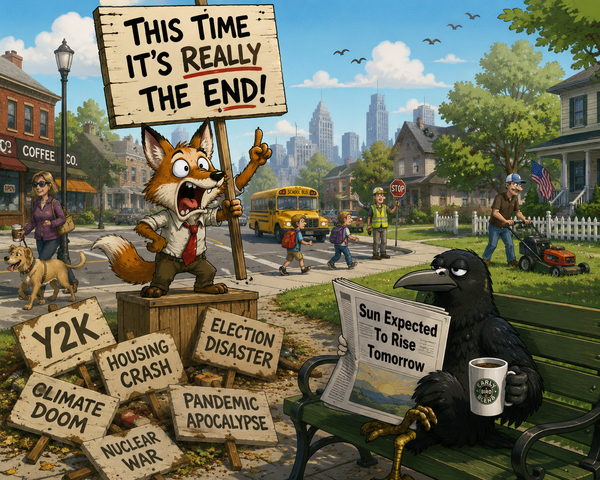
    Most people wake up these days and, they already know the world is ending before they’ve had their first cup of coffee.

    Used to be you’d flip on the morning news. Maybe Good Morning America. You’d hear some bad news, sure, but then there’d be a segment on a dog that learned to skateboard, or some heartwarming story about a kid raising money for his neighbor. You’d get the weather. Somebody would laugh too loud at something that wasn’t that funny.

    Now people roll over, grab the phone, and start scrolling. And the algorithm figured out a long time ago that outrage keeps you looking longer than a skateboarding dog does. So that’s what it feeds you, nonstop, before you’ve put your feet on the floor.

    Right now it’s the war that was going to end but now it isn’t (oh wait, yes it is, never mind it’s not). Gas is either already too high or about to get worse, depending on which story you read first. Or we’re living in a dystopian nightmare. It’s exhausting, it’ll ruin your morning or your whole day before it starts if you let it.

    But it’s always been this way, just maybe not quite as much in our faces.

    Just a few years ago we were all going to die. A sizable number of serious people were saying civilization was a few days away from coming apart. We’re still here.

    Before that, a particular election was going to send everything straight into the toilet. Whichever one you’re thinking of, someone said that about it. They all came and went and things are moving along. Most people would never even notice a difference if they weren’t told about it.

    Before that, the housing market had crashed and the same people who swore the crash wasn’t coming turned around and swore it would never recover. It recovered so much that now those same people say nobody can afford a house.

    Before that, terrorists were going to get us all. Hasn’t happened yet.

    Before that, the oceans were going to swallow everything if we didn’t figure out how to control the temperature of the sun. Still waiting on that one too, Al.

    Before that, nuclear holocaust by 1985. Wrong again.

    Before that, economic malaise was all we had to look forward to. Until things started growing so fast the 80s were known as the decade of greed.

    Eventually something is going to get us. That’s just the nature of things.

    But until then, you’ve got a life to live. And a morning to get through. If you spend it marinating in whatever disaster the algorithm decided you should be upset about today, you’ll make worse decisions, be harder to be around, and see problems everywhere, including in places that are actually fine.

    Here’s a pretty decent rule of thumb: if someone says it’s different this time or we will never recover from (insert problem here), they probably aren’t worth listening to.

    There will always be a reason to run and hide, if you just look for one.

    But the sun’s probably coming up tomorrow. Plan accordingly.

    PPS- If you’re not ready for a Reality Check but enjoy reading about land, markets, and how to think about both, you can sign up below and get these posts in your inbox.

    Register to Receive Posts Via Email!

    By submitting, I understand I will receive marketing emails and blog posts from Mike Browning Realty and/or associated companies. Unsubscribe at any time.

  • God Still Gives First (And Last)

    God Still Gives First (And Last)

    The last couple of Sundays I’ve been writing about how God gives first.

    With Solomon, the wisdom and wealth came before the instructions on what to do with them. With Israel as a whole, God repeatedly delivered, restored, protected, and provided before they promptly drifted again.

    Once you see it, the same thing shows up lots of places you hadn’t considered.

    Like with Moses.

    Moses didn’t earn his position. God chose him, sent him, empowered him, and used him to bring Israel out of Egypt. The miracles, authority, provision, all of it was given first.

    Then came the responsibility.

    But God also promised to be with Moses in a way most of us can barely imagine. God met with him face to face, spoke to him directly, and answered his questions.

    Most of us think that if we had an advantage like that, obeying would be easy.

    By now you’re probably seeing the problem with that assumption.

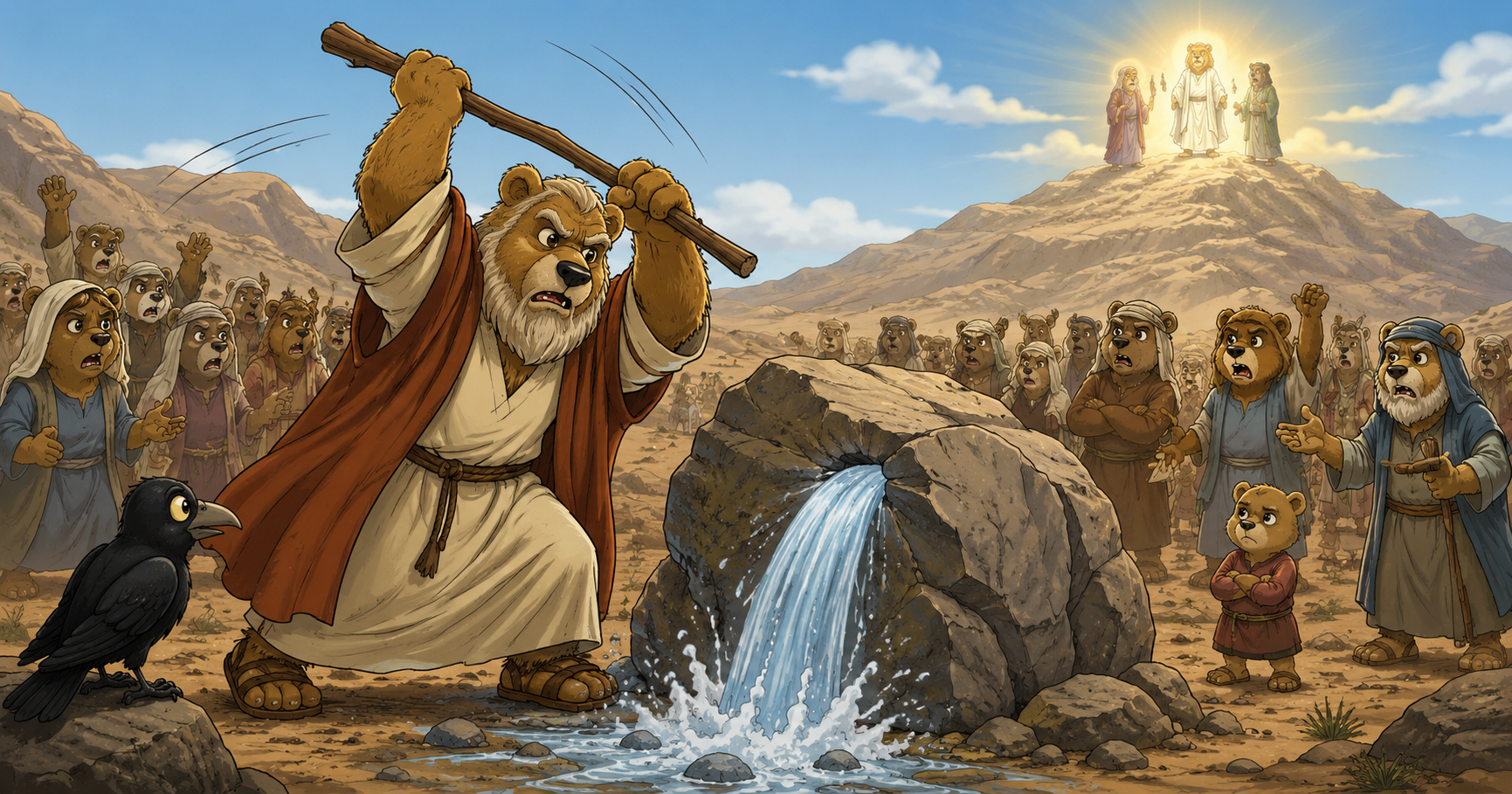
    By the time you get to the incident with the rock, Moses is worn down. The people are complaining about water again, which by that point had become a recurring theme.

    God tells Moses to speak to the rock.

    Instead, he strikes it. Angrily, while telling the Israelites what ingrates they are.

    Water still comes out. The people get what they needed. If you judged strictly by outcome, it wouldn’t even look like much of a problem.

    But God had been clear.

    And Moses did something else.

    That was enough.

    He was told he would not enter the Promised Land. After everything else, after leading Israel for decades, that was the line.

    We struggle with that because it feels disproportionate. We immediately start grading the sin ourselves. It wasn’t murder. It wasn’t idolatry. He didn’t steal anything. He got frustrated, lashed out, and did something he wasn’t supposed to do.

    Sound familiar?

    But the Bible doesn’t treat sin the way we do. Moses knew what God had said, and he did something different. That was enough.

    And there wasn’t a way for Moses to fix it himself.

    No second attempt. No chance to go back and do it correctly the next time. He led Israel to the edge of the land, and stopped there.

    But don’t overlook something that happens later.

    At the transfiguration, Jesus Christ is seen speaking with Moses and Elijah.

    I used to glide right over that part. If you’re talking about the most important figures in the Bible, Moses is obviously one of them. Of course he’s there.

    But then it hits you.

    By God.

    The consequence still happened. Moses did not walk into the land with Israel. But it wasn’t the end of the story.

    Same pattern over and over. God gives. We fail. God restores.

    Which is fortunate, because if the arrangement depended on us fixing ourselves first, none of us are getting very far.

    It’s never too late.

    Until it is.

  • Like Getting Paid In Advance

    Like Getting Paid In Advance

    Last week was about Solomon and how that ended. He was given everything and had every advantage. God appeared to him directly and told him what to do, which we all assume would settle it for us. It probably wouldn’t. It didn’t for him.

    But it’s worth considering how it started.

    God didn’t tell Solomon to go prove himself first. He didn’t say, follow these rules for a while and then I’ll give you wisdom, riches, and long life. He gave it to him, then told him what to do with it. That order matters.

    And it isn’t unique to Solomon.

    Look at David. Made king, established, given victory and position, and then later failed in a way that wasn’t subtle. Look at Israel as a whole. Delivered, restored, protected, and then the same pattern shows up again. Drift, idols, collapse, and eventually crying out to be restored again.

    It keeps happening, which makes it harder to treat as isolated mistakes.

    God gives first. Then people fail to hold onto what they were given. The issue isn’t that the instructions were unclear or that they didn’t have enough. They had more than enough. They just didn’t keep it.

    That includes you.

    There’s another place where the order matters.

    Through Jesus Christ, forgiveness is already there.

    It doesn’t work like clean yourself up and then come. It’s come, and then get cleaned up.

    Same pattern. God gives, God restores, and we don’t hold it together on our own, which is fortunate because we can’t.

    All that’s left is to turn, ask, and believe.

    It’s never too late.

    Until it is.


    Register to Receive Posts Via Email!

    By submitting, I understand I will receive marketing emails and blog posts from Mike Browning Realty and/or associated companies. Unsubscribe at any time.

  • The Wisest Man Who Ever Lived

    The Wisest Man Who Ever Lived

    Solomon is usually treated like a success story.

    The wisest man who ever lived. Builder of the temple. King at the height of Israel’s power. Probably the richest man who ever lived.

    All of that is true.

    But if you read it straight through, it doesn’t land that way. He may be the most tragic figure in the Bible, although he’s got a lot of competition.

    God gave him what he asked for, wisdom, and then added everything he didn’t ask for. Wealth, power, reach. And He didn’t leave Solomon guessing. He appeared to him and told him directly what to do and what not to do.

    The instructions weren’t complicated. Stay loyal. Don’t go after other gods. Don’t marry foreign wives who would pull him that direction.

    Not all at once. It builds. More alliances. More marriages. More tolerance for things he would have rejected earlier. At some point it isn’t drift anymore, it’s direction.

    Seven hundred foreign wives and three hundred concubines. That’s not fudging what God says on some technicality. It’s about as blatant as you can get.

    And it didn’t stay private. He followed their gods, built places of worship for them, and made it normal.

    The wisest man who ever lived saw God, heard Him, knew better, and still walked straight into it.

    That part tends to get glossed over.

    Because it gets in the way of something people want to believe. That if things lined up for them, they would do better. More clarity, more money, more control, and they would handle it correctly.

    Don’t buy it.

    We’ve all seen it when we’re looking at someone else. Give them a little more room, a little more success, a little less pressure, and the lines start moving. What used to be off limits becomes negotiable. Then it becomes normal.

    So when someone says they would be different if they just had the right setup, don’t buy it. Things lined up for him as much as they ever will for anyone.

    Didn’t matter.

    The question isn’t whether you’ll hold the line perfectly. That part is already answered.

    Provision wasn’t made because we might succeed. It was made because we won’t.

    Through Jesus Christ.

    If you’re waiting until you feel more capable or more disciplined, you’re waiting on something that doesn’t show up.

    It’s never too late.


    P.S.
    If you’d like to read through the Bible this year, you can join us at His Word Together.
    No commentary.
    No telling you what to think.
    Nothing to buy.
    Nothing fancy.
    Just steady time in the Word.

    Register to Receive Posts Via Email!

    By submitting, I understand I will receive marketing emails and blog posts from Mike Browning Realty and/or associated companies. Unsubscribe at any time.

  • Worse Than Even I Thought

    Worse Than Even I Thought

    Last week I wrote about how we are not “good enough.”

    Not close.

    Numbers in the Old Testament prescribed sacrifices for sins people committed without even knowing it.

    Jesus raised the standard higher.

    If you look with lust, you’ve committed adultery in your heart.
    If you harbor anger, you’re in danger of judgment.

    Paul says in Romans there is none righteous. Not one.

    God’s standard is perfection.

    One sin disqualifies you.

    And we all know, if we’re honest, we can’t go very long without messing up.

    But here’s what I did not expect.

    Vox Day wrote a working paper called Quantifying the Fall of Man that attempts to test the doctrine of Original Sin against behavioral data.

    Day only included sins clearly condemned in the New Testament.

    Lying.
    Lustful thought.
    Sinful anger.
    Envy.
    Dishonesty.
    Gossip.

    No ceremonial law.
    No disputed edge cases.
    No sins of omission.

    And he used the lowest available numbers from peer-reviewed studies. Mostly self-reported data, which likely underestimates everything.

    The conservative floor?

    4.33 sins per person per day.

    That’s the minimum.

    From age 3 to age 78, using those conservative inputs, that comes out to about 114,000 sins in one lifetime.

    That’s the floor.

    A more realistic estimate would push past 250,000.

    Now here’s where it gets uncomfortable.

    What are the odds of going one full day without committing one of those sins?

    About 1 in 1,190.

    So maybe three sinless days per decade, if you’re average.

    Encouraging?

    Not really.

    Because the probability of stringing together 27,000 of those days in a row is effectively zero.

    On the order of 10 to the negative eighty-something power.

    In plain English:
    Across roughly 112 billion humans who have ever lived, the expected number of naturally sinless lives is zero.

    Not “unlikely.”
    Zero.

    And remember, this excludes sins of omission.
    It excludes pride.
    It excludes ingratitude.
    It excludes the full force of the Sermon on the Mount.

    We are not just slightly flawed.

    We are mathematically incapable of pulling this off ourselves.

    That should end the political fantasies.

    Elect the right people.
    Pass the right laws.
    Fix the system.

    It doesn’t solve the core problem.

    The problem is upstream.

    The distribution never reaches zero.

    There has only been one exception.

    And if the math is right, that exception cannot be explained by natural human variation.

    Which is exactly what Christianity has claimed from the beginning.

    Here’s the good news.

    Jesus does not require you to fix yourself before coming to Him.

    That would defeat the entire point.

    You can’t clean yourself up enough.

    Just come.


    P.S. If you’d like to read through the Bible with us this year, you can join at His Word Together.

    Nothing fancy. Just steady time in the Word.