Tag: Human Behavior

  • “You’re Right”

    “You’re Right”

    I’ve said it plenty of times and almost never meant it.

    Usually I’m on the wrong side of a desk somewhere. Buying a vehicle and sitting through the extended warranty pitch. Standing in a furniture store while somebody walks me through the protection plan…the one that covers everything except whatever eventually happens to it.

    I’ve already decided. I’m not doing it. Decided a while back, quietly, and now I’m just looking for a clean way out of the conversation.

    And the man keeps going. He’s got reasons. Some of them are decent reasons.

    So I tell him he’s right.

    Not because he moved me. Because I want it to be over.

    Then I read Never Split the Difference and found out that’s a known thing, and that it has a matching pair.

    Chris Voss says “you’re right” is the one you don’t want. When somebody hands you that, you’ve lost them. They’ve stopped arguing, they’d like you to stop talking, and nothing has changed except they’re now looking for the door.

    What you want to hear is “that’s right.”

    One word different. Opposite meanings. “That’s right” comes out of somebody when you’ve just described their own situation back to them better than they’d have put it themselves. It isn’t agreement with your argument. It’s recognition. And you only get there by shutting up long enough to have actually listened.

    Once you know the difference you start hearing it everywhere. My wife. My kids. Anybody who’s ever wrapped up a conversation with me a little earlier than I expected.

    The catch is you have to give up being the smartest man in the room to get there. You don’t get to lead with what you know, which is generally the whole reason you opened your mouth. Most people can’t stand that. Which is exactly why it keeps working for the ones who can.

    I still tell the warranty guy he’s right. Some things you don’t fix.

    But I quit taking it as a compliment when somebody says it to me.


    PS- That link goes through Amazon, and I’m an affiliate. Doesn’t cost you a dime more, but if you click through and buy the book, or anything else while you’re there, I get a small commission.

  • Shouldn’t This Be Kept Secret?

    Shouldn’t This Be Kept Secret?

    I’ve been writing the last few weeks about Jim Camp’s negotiation masterpiece, Start With No. Along with occasionally trying to talk you into buying a copy and reading it yourself.

    Thanks to those who bought through my link. I don’t think you’ll be disappointed. If anything, you’ll probably be surprised how quickly you start seeing opportunities to apply the basics.

    One question comes up pretty often when people hear about systems like this.

    If it’s really that effective, why would you tell anyone about it?

    Wouldn’t you be better off keeping it to yourself?

    It’s a fair question.

    Camp actually addresses it in the book. He said he wished more of his counterparts used the same system he did. Negotiations would be smoother, less emotional, and far more productive.

    Instead of spending days playing games, the cards would get on the table faster. You’d either make the right deal sooner or discover there was never a deal to be made in the first place.

    Both outcomes are wins.

    Obviously getting an agreement is great. But finding out in a day that there’s no deal instead of spending a week chasing one isn’t exactly a loss. It frees both sides to move on to something more productive.

    The difference comes down to principles versus tactics.

    If a finance manager at a car dealership has figured out a handful of tricks that pressure people into buying an overpriced warranty, he doesn’t want those tricks publicized. Once the person across the table understands the game, the game stops working.

    Tactics depend on the other side not knowing what’s happening.

    Principles don’t.

    If you’re asking honest questions, trying to understand what’s really going on, and looking for a deal that makes sense for everyone involved, it doesn’t hurt when the other side understands what you’re doing. In some cases it actually helps.

    Beyond that, I don’t spend much time worrying about other people learning what I know.

    Most people won’t put it into practice anyway.

    And the few who do often become easier to work with, not harder.

    One of the things I like most about Camp’s approach is that it removes much of the tension people normally associate with negotiation. Less pressure. Less posturing. Less pretending.

    Just figuring out whether there’s a deal to be had and, if so, what it looks like.

    Once you learn it, it really does feel like you’re playing a different game than before.

    In a good way.

    And since almost every situation you encounter involves negotiation, getting better at it is one of the highest-leverage investments you can make in yourself.

    It won’t happen overnight.

    But you’ll probably see results faster than you expect.

  • My Wife Thought It Was Magic

    My Wife Thought It Was Magic

    Most people think negotiation is something that happens in land deals. Maybe car deals too.

    It’s not.

    Trying to get your kid to clean their room is negotiation. Deciding where to eat is negotiation. Getting time off work for an appointment is negotiation. Most of life is negotiation whether we realize it or not.

    Improving your negotiation skills is probably the most high leverage way to improve your life overall. It touches everything.

    Most people picture a great negotiator as the guy at the dealership. Pushy. A little slick. Leaning on pressure and urgency because that’s the only lever he knows how to pull.

    Sometimes that works.

    But ask yourself how you feel after most car-buying experiences. Even if you like the car, you’re often thinking, I’m never buying from that guy again.

    That’s the problem with pressure tactics. Even when they work, they burn bridges. You win the deal in front of you and lose the next ten.

    Jim Camp’s system from Start With No is different, though I wouldn’t call it the opposite of that. It’s not weak, and it’s not caving in to get to yes faster. Weak gets eaten alive by anyone with real leverage. What it does is take a lot of the tension out of the room without giving up your position. Deals close easier. People stay friendly afterward.

    Sometimes it works so well it’s almost unsettling.

    A while back my wife bought something online from a company that was very clear about its policy. No refunds. No exceptions.

    Naturally, the item broke almost immediately.

    She emailed them and got exactly the response you’d expect. They pointed to the policy and politely told her no.

    She was frustrated.

    I looked at the exchange, wrote a short response, and told her to send it. Maybe four sentences.

    She read it and said there was no way it would work, but she sent it anyway, and the refund was approved almost immediately.

    What amused me wasn’t the refund. It was what happened afterward.

    She looked at me suspiciously and asked:

    “Have you been using this on me?”

    I assured her I only use my powers for good.

    One of the reasons I like Jim Camp’s work is that his system doesn’t rely on pressure, clever arguments, or trying to talk circles around people. In fact, a lot of the time it involves talking less, not more.

    That’s harder than it sounds.

    If you’ve never read Start With No, it’s worth your time.

    P.S. The link goes through Amazon and I’m an affiliate. It doesn’t cost you anything extra, but if you buy the book (or anything else while you’re there), I get a small commission.

  • We Don’t Decide With Our Brains.

    We Don’t Decide With Our Brains.

    We Decide With Our Guts and Hire Our Brains as Lawyers.

    There’s a genre of video that shows up online every election cycle.

    Someone reads a quote to a stranger on the street. Says a politician on the other side said it. The stranger nods along, agrees with every word, maybe adds their own commentary about how reasonable it sounds.

    Then the interviewer reveals who actually said it.

    The person on camera backpedals. Gets flustered. Sometimes gets mad.

    We watch that and think: what a rube. Didn’t even evaluate the idea on its own merits. Just heard a name and reacted.

    Here’s the part nobody likes hearing. That’s not a them problem. Everyone is prone to this sort of thing.

    We decide with emotion first. Then we go looking for the reasons. Most of the time we don’t even notice we did it in that order, because the reasons show up so fast it feels like they came first.

    Car salesmen have known this forever. Their whole job is getting you to want the car before you’ve priced it out and started the paperwork. Once you want it, you’ll find your own reasons the payment makes sense. Even though it’s more than you said you wanted to spend just a little earlier.

    It’s not just dealing with salesmen. It’s most of what moves us, all day, every day, if we’re not paying attention.

    I can tell you it’s smart to have a real handle on your finances. I can tell you that if you own land or commercial property, it makes sense to know roughly what it’s worth, what’s selling around it, what the county or the highway department is planning nearby. Not because you’re doing anything about it. Just because things change, sometimes fast, and it’s better to know than not know.

    You’ll agree with all of that. Nobody argues with it.

    And most people still won’t do anything about it.

    Not because it’s hard. Because of what happens in your chest the moment you think about picking up the phone.

    If an agent calls about your property, most people’s first thought isn’t “great, information.” It’s a mental preview of getting talked into something. Buzzwords. Pressure. A conversation that ends somewhere you didn’t want to go.

    Or it’s the family part. Land that’s been sitting in the name a long time carries more than a market value. Selling it, or even looking like you might, comes with a conversation you’re not ready to have with your brother or your kids.

    I know because that’s the same thing that runs through my head when it’s my property.

    None of that has to be true here.

    Looking isn’t selling. Nobody has to know you looked. You’re not committing to a conversation with your family, a listing agreement, or anything else. You’re just getting the numbers so you’re not guessing later, when guessing costs more.

    Give yourself permission to look. That’s smart to do, and you don’t have to go further.


    PPS- If you’re not ready for a Reality Check but you liked this one, you can sign up below and get these posts in your inbox.

    Register to Receive Posts Via Email!

    By submitting, I understand I will receive marketing emails and blog posts from Mike Browning Realty and/or associated companies. Unsubscribe at any time.

  • Being Impressive Can Be Overrated

    Being Impressive Can Be Overrated

    I told this story on here a while back, but a lot of you weren’t reading yet, and I think it’s worth revisiting.

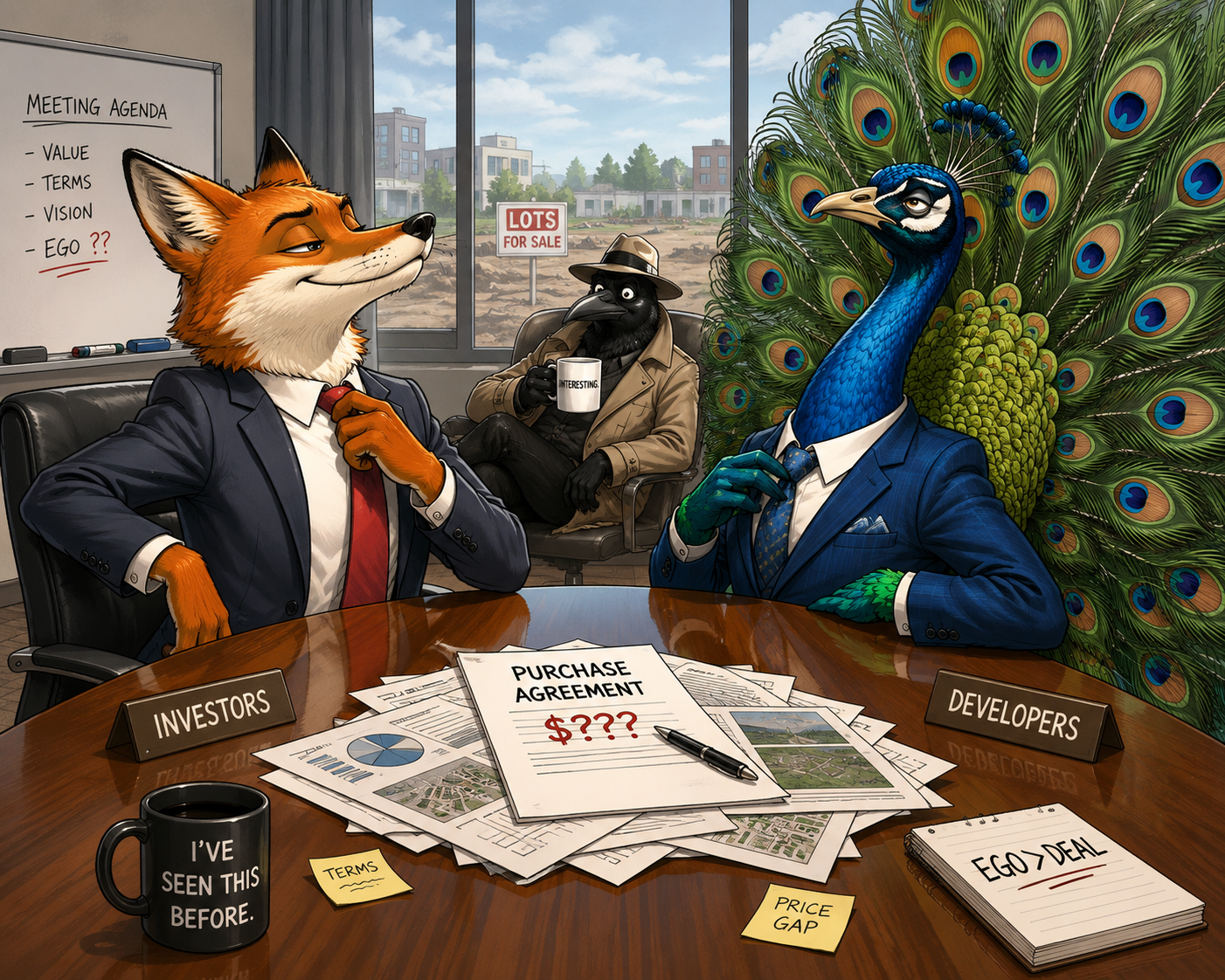
    Not long after the 2008 mortgage crisis, there were vacant lots everywhere and only a handful of buyers. I represented one of the few builders looking to acquire. We sat down with an investment group that was holding lots, to see if there was a fit.

    Realistically, a deal probably wasn’t happening regardless. The timing was wrong, the housing type probably wasn’t a fit, and pricing for builders and sellers was miles apart.

    But this meeting was doomed before anyone opened their mouth.

    The guy leading the investors was sharp. Sharp enough that he couldn’t stand to let it go unnoticed.

    Our builder’s CEO was the same. Two smart guys, both determined to be the one everybody left the room thinking about.

    They weren’t negotiating so much as performing. The rest of us just sat there and watched until the end, then went on our way.

    Not long after, my guy handed acquisitions to someone quieter and went back to running the company. Fifteen years on, that company is publicly traded, one of the biggest homebuilders in the country.

    The other guy didn’t fare quite as well. Overconfidence turned into overleverage, and overleverage turned into prison.

    He’s out now. I won’t be knocking down his door looking to do business again, although you never say never. As a broker you don’t always get to choose.

    Jim Camp writes about “okayness” in Start With No. In any interaction, only one person gets to feel completely okay. Your job is making sure it’s the other guy.

    If my client had just let the other man have his moment, instead of matching him move for move, it may have been different. Not that day, probably. The numbers were too far apart for that. But there’s a real chance we’re doing business with those investors again down the road, instead of never speaking to them again.

    If you remember the old TV show Columbo, he solved every case for the same reason. He walked in looking rumpled and half a step behind, and the guilty party relaxed just enough to talk too much.

    That’s the whole move. You don’t have to be less capable. You just have to stop trying to prove it so much.

    I’ve watched it play out both ways enough times to trust it. The guy who needs the room to know he’s the smartest one in it almost always ends up negotiating against himself. The one who can let that go usually walks out with the better deal, and sometimes a second chance at one he didn’t get the first time.

    Buy the book, and learn the system. It’s not hard and doesn’t require you to become some sort of master communicator or smooth talker (thank God).

    Register to Receive Posts Via Email!

    By submitting, I understand I will receive marketing emails and blog posts from Mike Browning Realty and/or associated companies. Unsubscribe at any time.

  • The Danger of Needing It

    The Danger of Needing It

    One of the best books on negotiation is Start With No by Jim Camp. Probably the single most important idea in it: neediness is the first thing you have to get control of. Until you do, you’re at the mercy of whoever you’re sitting across from.

    Doesn’t matter if it’s a car, a house, a piece of land, or where you’re going for dinner Friday. Same rule.

    Go shopping for a car and it’s about a sure thing that once you show real interest, the salesman mentions someone else. They’re coming to look at it this afternoon. Or they were in yesterday, said they’d probably be back. Whatever the line is, the point is the same. Make you feel like if you don’t move now, you’re going to lose it.

    And it works. Not because you’re gullible. Because it’s aimed at something real. The second you stop thinking “I like this” and start thinking “I need this,” you’ve handed over the leverage.

    You don’t even notice it happening. You just start agreeing to things you wouldn’t have agreed to an hour earlier.

    Here’s what your brain skates right past. On the way to that lot, you passed a few thousand other cars. Other lots. Other listings. These things are mass produced. If this one gets away from you, there’s another one out there, probably better, and you’ll never think about this one again.

    You need food. You need shelter. Around here you probably need a vehicle of some kind. But you don’t need this particular car. You don’t need this particular house.

    Land’s a little different. No two pieces are exactly alike, so in a technical sense a specific tract really is one of one. But different doesn’t mean irreplaceable. Miss it, and the sun still comes up tomorrow. You still eat dinner. You’ll find something else that checks the boxes, maybe something you like better, and you won’t spend one more minute thinking about the one that got away.

    Wanting something is fine. Wanting it enough to stretch a little, work for it, negotiate hard. Also fine, as long as you’re doing it with your eyes open. Needing it is where it goes sideways.

    That’s when you stop negotiating and start hoping nobody notices you’re begging.

    The people on the other side of the table notice. Even the ones who aren’t trying to work you over will feel the shift, and the good ones absolutely will use it. Not because they’re crooked. Because that’s the game, and you just told them you’re not really playing it anymore.

    The fix isn’t complicated, even if it’s not easy. Notice when you’ve crossed the line from “I’d like this” to “I have to have this.” That’s your signal to slow down, not speed up. Ask yourself what you’re actually risking by waiting a day. Usually the honest answer is: not much. The deadline was mostly invented to make you feel exactly what you’re feeling right now.

    Camp built an entire system around this, and it’s worth your time if you’ve never read it. Whether you’re negotiating a purchase, a sale, a raise, or just trying to get your teenager to clean their room. Once you see how much of negotiation is really about who wants it less, you can’t unsee it.

    It’ll change how you walk into every negotiation. And since everything is a negotiation, it may change your life.

  • The First Step Is Usually the Hardest

    The First Step Is Usually the Hardest

    I remember being told growing up that it takes less gas for a car to idle for a few minutes than to shut it off and restart it. Something about wear on the starter too. I heard the same thing about lights. About computers. If the goal was saving energy, you were often better off leaving things running than flipping them on and off.

    Might not have been true. I’m not an electrician or a mechanic, and it was a long time ago. So even if it was true then maybe it isn’t now.

    Beside the point anyway.

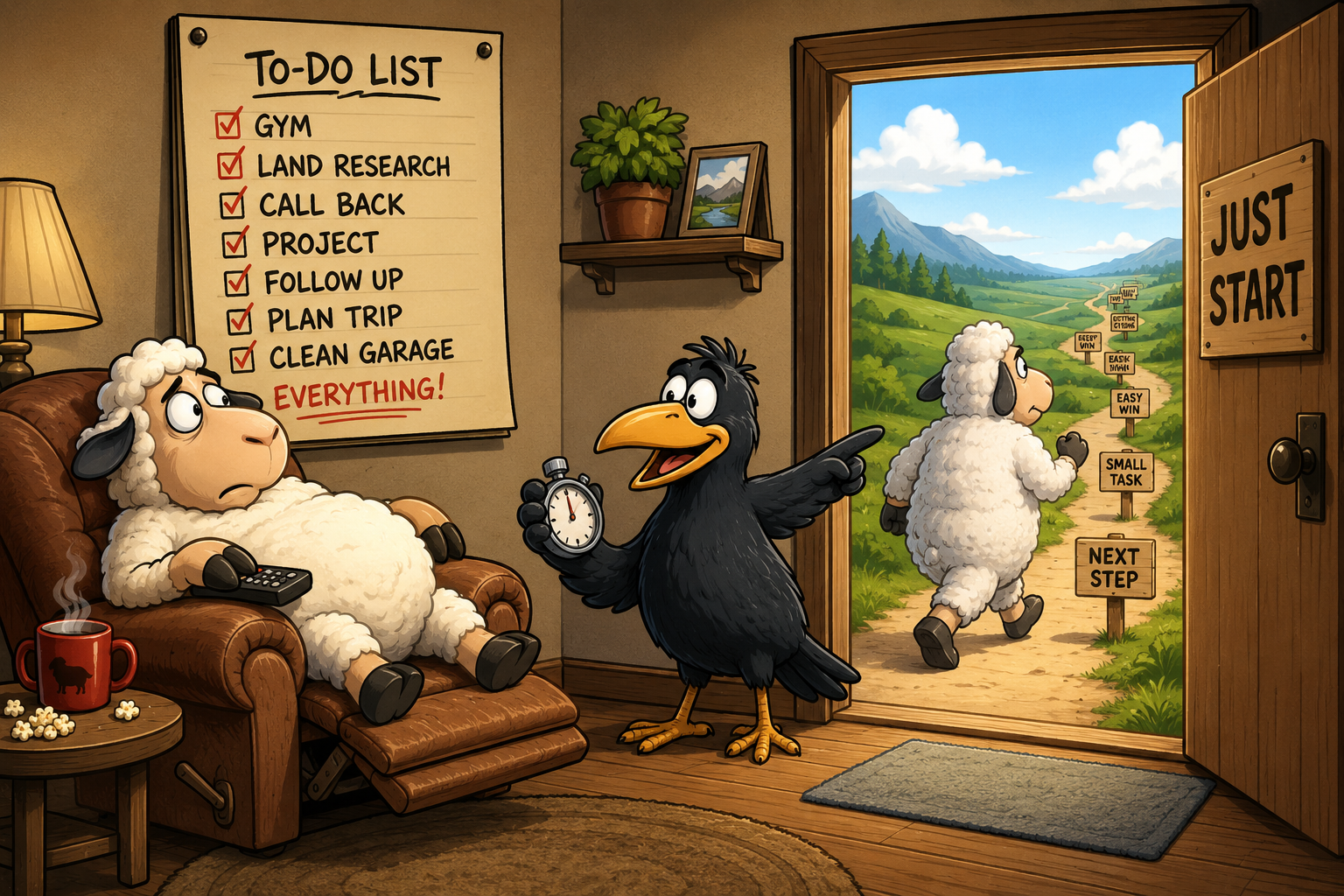
    I read something recently noting that the hardest part of most tasks isn’t the task itself. It’s going from not moving to moving. Once you’re in motion, momentum does most of the work. The whole fight is getting off the couch.

    Once you see that, you can use it against yourself, in a good way. Can’t get motivated for the gym? Make a deal. You’ll get dressed, drive there, walk in. If you still don’t feel like it once you’re inside, you can turn around and go home.

    Do this enough times and you’ll find you almost never leave.

    Just getting started was the whole battle.

    I use this at the office too. There are some projects I have that I don’t look at every day, but are large and have lots of moving parts. When it’s time to pick them back up, they’re overwhelming enough that putting them off a little longer feels reasonable. Which would just make it worse.

    If I commit to ten minutes, just one small task like sending an email or reviewing what’s left to do, I almost never stop at ten minutes.

    If anything I end up with the opposite problem. I get moving and don’t stop. An hour turns into four, and something else I meant to get to that day doesn’t happen. I’ve started setting alarms just to make myself quit.

    The same thing happens with bigger decisions too.

    If you own non-residential real estate, it’s probably a real chunk of your financial picture. Worth knowing what it’s worth, and what’s happening around it that affects that. Not because you’re looking to sell. Usually the smart move is waiting, unless you’ve got somewhere better to put the money or a reason that forces your hand.

    But it’s better to have the information and not need it than to need it and not have it.

    Most people never get the information. Getting started feels like a bigger thing than it is.

    And there’s the barber problem. Ask a barber if you need a haircut and you already know the answer.

    Call about your land looking for information and you end up on the phone with a salesperson telling you all the things you need to do that happen to be very good for them. So people put it off.

    It doesn’t have to go that way.

    It takes about two minutes to request, and it shows up in your inbox a few days later.

    No pressure, because there isn’t a pitch waiting on the other end.

    You don’t have to be ready to sell.

    You just have to be willing to know where things stand.

    Register to Receive Posts Via Email!

    By submitting, I understand I will receive marketing emails and blog posts from Mike Browning Realty and/or associated companies. Unsubscribe at any time.

  • The World As It Is

    The World As It Is

    Some people spend a lot of energy being offended by things that were never about them.

    Someone says something careless. Or acts a certain way in public, or online, or at work. And someone else sees it and decides it was aimed at them personally. Now there’s a problem to solve. A wrong to correct. A wound that needs acknowledging.

    A lot of times the other person wasn’t thinking about them at all.

    People are self-absorbed, although usually in ordinary, harmless ways. They’re worried about their own day, their own bills, their own kid’s homework. The comment that landed wrong, the look that seemed pointed, the rule that felt unfair. Most of it is just noise other people are making while they live their own lives. It only becomes about you if you decide it is.

    Obviously I’m not saying bad behavior doesn’t exist. People are rude and small and unfair plenty. As the saying goes, some people are just jerks.

    But there’s a difference between noticing things and letting those things ruin your day, or organizing your life around the idea that the world should have treated you a certain way and now owes you something for not doing it.

    That’s exhausting. And it doesn’t change anything. Whatever happened still happened. All that’s changed is you’ve spent the afternoon carrying it around.

    The people who do best are the ones who deal with the world as it actually behaves instead of how they wish it did. And move forward accordingly. That doesn’t mean you can’t be disappointed at times, but it happens to everyone.

    This is one of those concepts you see everywhere once you notice it for the first time.

    A seller looks at their property and decides what they want it to be worth. Based on what they put into it, what they need out of it, what the neighbor claimed his sold for at the mailbox. None of that is the market. The market doesn’t know what you need and doesn’t owe you a number.

    You can list at an unrealistic number you wish were true, but I don’t recommend it. Buyers will simply ignore you, politely or not, and the property sits.

    You can price it at what the market will actually pay, today, with the buyers who actually exist, and move forward. Or you can wait. And maybe later things will be more to your liking.

    Both are real choices. Waiting for the market to come around to your number may be the right call. Nobody knows the future, but in north Texas land has tended to rise over time. If you’re not in a hurry, or don’t need to sell, it might be the best choice.

    But the market isn’t being unfair to you for not acting like you wish it would. It isn’t being anything. It’s just being a market.

    PPS- If you’re not ready for a Reality Check but enjoy reading about land, markets, and negotiation, you can sign up below and get these posts in your inbox.

  • The Open Shirt Rule

    The Open Shirt Rule

    Even if you don’t follow soccer, you’ve probably caught some of the World Cup coverage this month. One thing that keeps coming up: visitors are surprised by what kind of country this actually is.

    If all you knew was social media, you’d think we’re at each other’s throats. Police and immigration checkpoints on every corner. Nobody happy to be here. The place a mess.

    Then people show up and it’s nowhere close to that.

    It’s nice watching that land on someone in real time. You’d think it might make the rest of us put the phones down. Stop getting ourselves worked up over whatever someone decided to be offended by this week.

    You’d think that. You’d be wrong.

    A little over a week ago, a woman in Celina said a local restaurant made her leave for breastfeeding her infant. She posted about it. It went everywhere. People who weren’t in the building had a lot to say about how we’ve apparently traveled back in time a hundred years.

    The owner, also not in the building that day, said it was a miscommunication and that breastfeeding has never been against their policy. That part got considerably less attention.

    It made the paper, which tells you something on its own. Read the article and what you mostly get is one woman’s account, repeated back as fact, plus some comments from people online. The owner’s side is in there, technically. A video statement, summarized. Her first name. No last name. Strange, for a story where the reporter supposedly tried to reach her.

    If you’d actually talked to her, you’d probably have that. Or you could have asked around, it’s no secret who owns the place and she’s reasonably prominent around town.

    I don’t know what happened in that restaurant. Neither does anyone who wasn’t there, which is most of the internet. What people will walk away remembering isn’t the truth. It’s just who got cast as the villain.

    On the breastfeeding question itself: I don’t know a single person who’s bothered by it, or thinks it should be against the rules anywhere. I know plenty of people who believe in being considerate when you can be. Those aren’t the same position, and treating them like they are is how you end up shouting at people who already agree with you.

    You’re allowed to open carry in Texas. I think that’s a real right and I’m not interested in arguing about it. But when I see a guy walking through Walmart with a pistol on his hip for no particular reason, I don’t read that as confidence. I read it as someone hoping somebody says something so he gets to be right about it.

    Same instinct, different subject. You’re allowed to do the thing. Doing it the most visible way possible, without consideration for others, isn’t really about the thing anymore. Maybe the other person is wrong, doesn’t hurt you to accommodate them.

    Do what you need to do. Just notice when you’ve stopped doing it for the reason you started.

    Register to Receive Posts Via Email!

    By submitting, I understand I will receive marketing emails and blog posts from Mike Browning Realty and/or associated companies. Unsubscribe at any time.

  • Ambushed By A Salesman In Real Time

    Ambushed By A Salesman In Real Time

    I keep coming back to this one: people put off stuff they already know they should deal with. Not because they’re lazy. Because they’re avoiding a hassle they’re pretty sure is coming.

    Take your land. You’re not looking to sell it today. But knowing what it’s worth, and what’s happening around it, can’t hurt you. You’d have the information sitting there if anything changes. If a neighboring tract comes up for sale, you’re not finding out last. And if it’s a good deal, you might be ready to move on it first.

    So why do most people pass when someone offers them free information?

    Mostly because they’ve been burned before.

    Mention you’re the slightest bit curious what your property’s worth and your mind jumps straight to a timeshare pitch. Numbers too good to be true. A guy who won’t take no for an answer.

    You ask one question. The phone starts ringing. And doesn’t stop.

    So you let it go. Not worth the hassle.

    That happened to me last week. My truck’s had a couple of recalls sitting open for a while (nothing major), and I’d been putting it off because I didn’t want to spend an afternoon at a dealership. A card came in the mail with a QR code, said I could schedule online. Figured I’d try it. The site barely worked, so I gave up after a few minutes.

    Except it worked fine, for what it was actually built to do.

    Within minutes my phone rang. Sales manager at the dealership. I let it go to voicemail. He wanted to know what car I was interested in and when I could come in for a test drive.

    A few minutes later, an email. Somehow he’d copied my wife on it too, asking what we were “working a deal” on.

    I asked for service. They tried to close me on a car I never mentioned.

    That’s the move. That’s why people stop raising their hand.

    When you raise yours with me, that’s not what happens. I’ll reach out, sure. Lightly. No pressure, no script.

    You can decide for yourself what that’s worth.


    PPS- If you’re not ready for a Reality Check but enjoy reading about land, markets, and negotiation, you can sign up below and get these posts in your inbox.

    Register to Receive Posts Via Email!

    By submitting, I understand I will receive marketing emails and blog posts from Mike Browning Realty and/or associated companies. Unsubscribe at any time.