Tag: Habits

  • The Majority Is Always Wrong

    The Majority Is Always Wrong

    Every group has one. The guy who argues with whatever gets said, just because it got said. Somebody mentions the weather and he’s got a problem with it.

    Nobody likes that guy. You spend half the get-together managing around him instead of just enjoying it.

    So don’t be him. That part’s easy to agree with.

    But not being the contrarian doesn’t mean going along with whatever the room decides. Those are two different things, and most people only learn the first one.

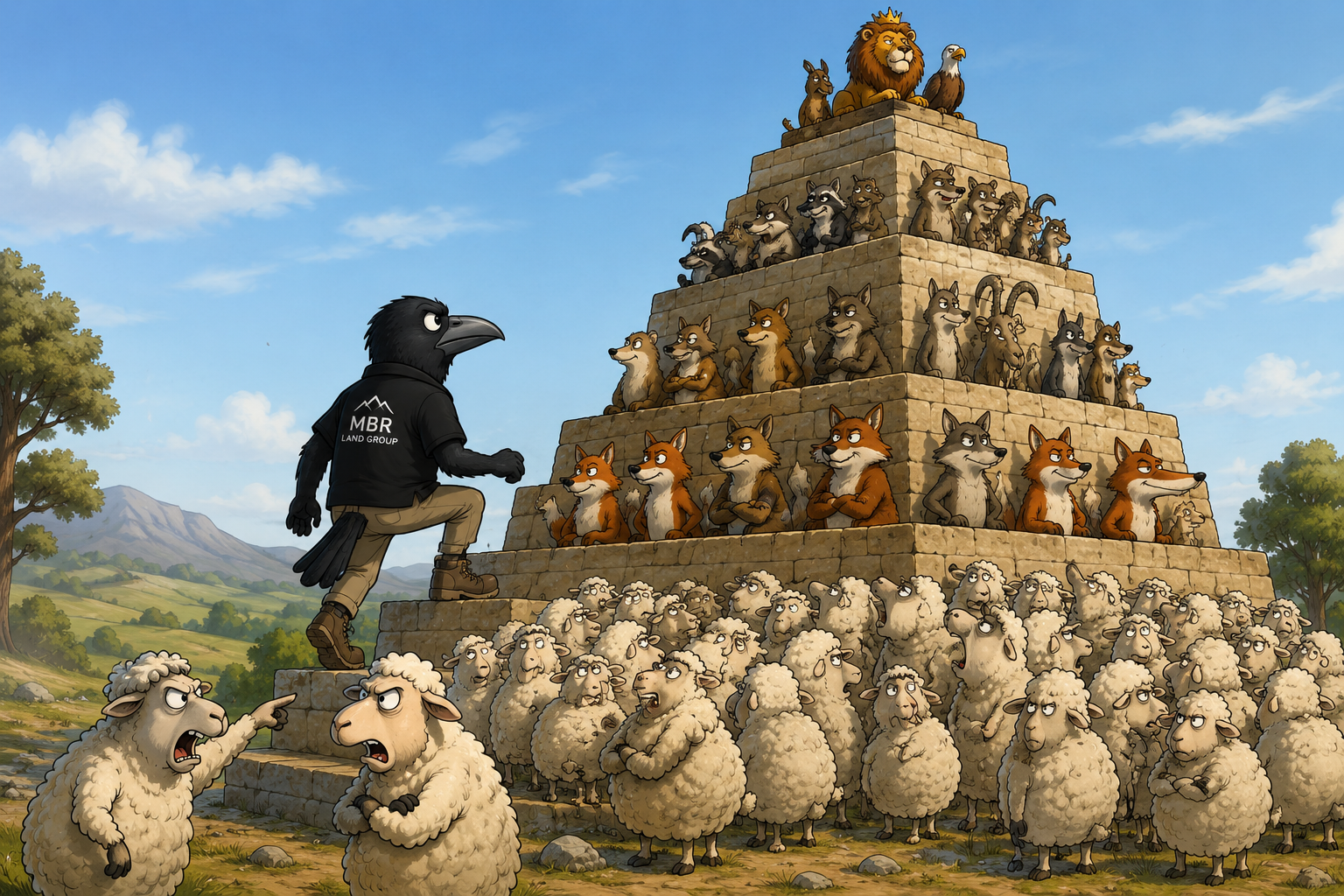
    Last week I laid out the pyramid. However you divide the exact percentages, the basic shape isn’t very controversial. A relatively small group ends up doing extremely well financially. A much larger group doesn’t.

    Which raises an obvious question.

    If you want an uncommon financial result, why would you copy common financial habits?

    The good thing is you don’t even have to know the right move to get started using this.

    Watch what most people actually do. They spend what shows up before it clears. They finance things that lose value the second they leave the lot. They treat “I deserve this” like a financial strategy.

    None of that tells you what you should do instead. It tells you what to cross off the list, which is most of the way to an answer before you’ve even picked one.

    Same logic works outside of money too. Look around any waiting room, any checkout line, any church pew five minutes before service starts. Half the room’s face down in a phone, and most of them would tell you they’re being productive.

    They’re not. They’re just bored in a way that feels busy.

    Doesn’t mean throw your phone away. Means the constant, twitchy, always-checking version of “staying connected” isn’t actually buying anybody anything. You can see that just by watching, without having a better system worked out yet.

    That’s the whole trick.

    You don’t need the answer sitting there ready to go before you start paying attention. You need to notice what the majority’s doing, ask whether it’s producing a result you actually want, and let that rule things out one at a time.

    You’re not arguing with anybody at the party either. You’re not standing up and announcing that everyone’s broke and bad with their phones.

    You just quietly stop doing what they’re doing. Let your own results talk whenever they get around to it.

    Ignore the crowd. Keep your mouth shut about it. Check back in ten years.

    If you want a whole book built around this idea, and one that will actually give you something to put in place of what you crossed off, get The Slight Edge by Jeff Olson.

    His argument is that the little decisions that are easy to make are also easy not to make. One doesn’t look like it matters much either way. But stack enough of them together over enough time and the difference gets enormous.

    Most people won’t do that because nothing dramatic happens today.

    Which is kind of the point.

    P.S. That link goes through Amazon, and I’m an affiliate. Doesn’t cost you a dime more, but if you click through and buy the book, or anything else while you’re there, I get a small commission.
  • The Pyramid Doesn’t Change

    The Pyramid Doesn’t Change

    Most people have heard of the 80/20 rule, where in any business or endeavor a relatively small percentage of the people involved are responsible for a disproportionately large percentage of the output.

    It’s not exact, of course, but it works pretty well as a rule of thumb.

    In a business, a relatively small group of customers will often account for most of the revenue. A relatively small group can account for most of the complaints too. Usually not the same group, unfortunately.

    Real estate works that way too. A minority of brokers do a very large percentage of the transactions.

    And so forth.

    What’s interesting is that you can often see the same thing inside the successful group. Some of the top performers substantially outperform the rest of the top performers.

    The pyramid keeps getting narrower as you go up.

    You can complain about that if you want, but unequal results show up just about everywhere people are producing, competing, creating or accumulating something.

    You probably aren’t going to change the shape of the pyramid.

    You can change your spot in it.

    Part of that is making sure you’re in a field where you have a reasonable chance of being one of the better performers. We’re all good at different things. Find what you’re good at and start there.

    Aside from that, operate in a way that makes success more likely.

    Contrary to what many people think, success usually isn’t a matter of doing one big thing at exactly the right time. More often it’s doing a lot of little things right for a long time.

    There’s a book called The Slight Edge by Jeff Olson that explains this a lot better than I do.

    The basic idea is that you arrange your life so you’re doing things just a little better than average, often by such a small amount that an observer wouldn’t notice much difference from one day to the next.

    But those little differences compound.

    And eventually the difference isn’t little anymore.

    The best part is there’s no name-it-and-claim-it or manifest-the-life-you-want mumbo jumbo.

    Just actionable advice you can actually implement in your life.

    P.S. That link goes through Amazon, and I’m an affiliate. Doesn’t cost you a dime more, but if you click through and buy the book, or anything else while you’re there, I get a small commission.

    Register to Receive Posts Via Email!

    By submitting, I understand I will receive marketing emails and blog posts from Mike Browning Realty and/or associated companies. Unsubscribe at any time.

  • The First Step Is Usually the Hardest

    The First Step Is Usually the Hardest

    I remember being told growing up that it takes less gas for a car to idle for a few minutes than to shut it off and restart it. Something about wear on the starter too. I heard the same thing about lights. About computers. If the goal was saving energy, you were often better off leaving things running than flipping them on and off.

    Might not have been true. I’m not an electrician or a mechanic, and it was a long time ago. So even if it was true then maybe it isn’t now.

    Beside the point anyway.

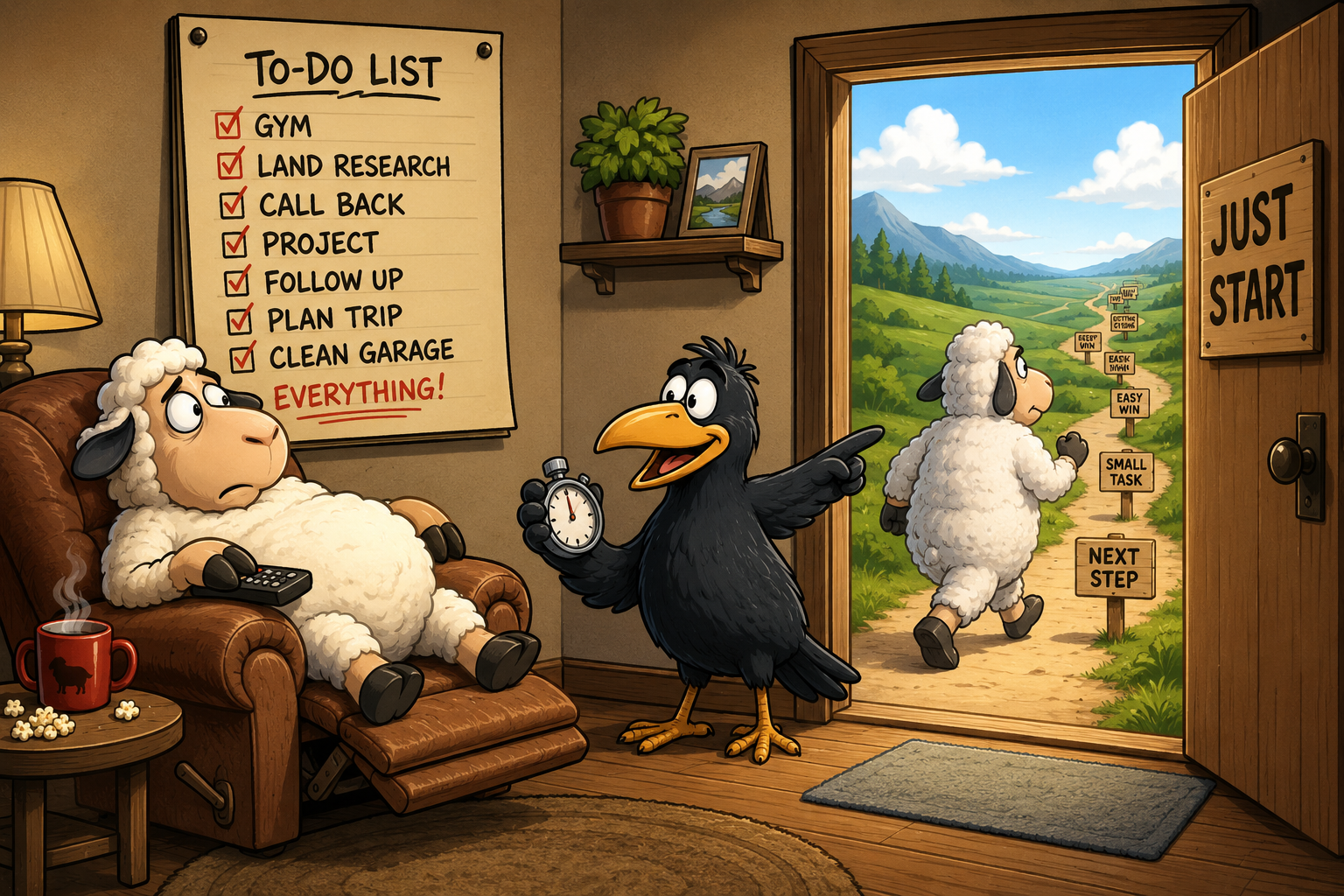
    I read something recently noting that the hardest part of most tasks isn’t the task itself. It’s going from not moving to moving. Once you’re in motion, momentum does most of the work. The whole fight is getting off the couch.

    Once you see that, you can use it against yourself, in a good way. Can’t get motivated for the gym? Make a deal. You’ll get dressed, drive there, walk in. If you still don’t feel like it once you’re inside, you can turn around and go home.

    Do this enough times and you’ll find you almost never leave.

    Just getting started was the whole battle.

    I use this at the office too. There are some projects I have that I don’t look at every day, but are large and have lots of moving parts. When it’s time to pick them back up, they’re overwhelming enough that putting them off a little longer feels reasonable. Which would just make it worse.

    If I commit to ten minutes, just one small task like sending an email or reviewing what’s left to do, I almost never stop at ten minutes.

    If anything I end up with the opposite problem. I get moving and don’t stop. An hour turns into four, and something else I meant to get to that day doesn’t happen. I’ve started setting alarms just to make myself quit.

    The same thing happens with bigger decisions too.

    If you own non-residential real estate, it’s probably a real chunk of your financial picture. Worth knowing what it’s worth, and what’s happening around it that affects that. Not because you’re looking to sell. Usually the smart move is waiting, unless you’ve got somewhere better to put the money or a reason that forces your hand.

    But it’s better to have the information and not need it than to need it and not have it.

    Most people never get the information. Getting started feels like a bigger thing than it is.

    And there’s the barber problem. Ask a barber if you need a haircut and you already know the answer.

    Call about your land looking for information and you end up on the phone with a salesperson telling you all the things you need to do that happen to be very good for them. So people put it off.

    It doesn’t have to go that way.

    It takes about two minutes to request, and it shows up in your inbox a few days later.

    No pressure, because there isn’t a pitch waiting on the other end.

    You don’t have to be ready to sell.

    You just have to be willing to know where things stand.

    Register to Receive Posts Via Email!

    By submitting, I understand I will receive marketing emails and blog posts from Mike Browning Realty and/or associated companies. Unsubscribe at any time.

  • The Easy Way Is The Hard Way

    The Easy Way Is The Hard Way

    Most of the time when something seems easy, you can count on one of two things.

    Either you did the hard work first and are moving downhill now,

    or you put the hard work off to be paid back later (with interest).

    You can see it everywhere once you start noticing.

    Skipping the gym is easy. Explaining your health later isn’t.

    Putting off a hard conversation is easy. Living with the tension that follows isn’t.

    Pricing your property high “just to see what happens” is easy.

    Watching it sit for six months while the serious buyers move on — that’s the hard part.

    We all tell ourselves we’re just buying time.

    But time has a way of collecting interest.

    There’s a reason discipline, planning, and patience sound boring — they front-load the difficulty.

    They make you face discomfort early, when it’s small.

    And that’s what keeps it from growing into something unmanageable later.

    Most of the people who get in real trouble — financially, relationally, professionally — didn’t simply make one big mistake. Or just get “unlucky once.”

    They just chose the easy path a few too many times in a row.

    Then they looked up and they weren’t where they wanted to be.

    (Probably blamed everyone but themselves too).

    In business, it looks like:

    • Avoiding tough calls because you don’t want confrontation.
    • Hiring the cheaper person because you didn’t want to dig deeper.
    • Waiting until the deadline because it “won’t take long.”

    Those decisions all feel harmless in the moment.

    But the easy way almost always turns into the expensive way.

    When I see sellers overprice their property, I already know what’s going to happen.

    They’ll get a few showings, no offers, and start to wonder why.

    Then six months later, after multiple price cuts, the listing is stale and buyers assume something’s wrong.

    The easy road — my allowing you to chase a fantasy number — turns into the hard reality of lost momentum.

    It works the other direction too.

    Doing things the right way up front — marketing elbow grease, honest pricing, and full disclosure — feels like work.

    But it makes everything that comes after easier.

    You don’t have to explain. You don’t have to backtrack. You don’t have to rebuild trust.

    That’s the hidden truth about the “easy” route: it just changes when you pay the cost.

    And the longer you delay it, the more expensive it gets.

    So the next time something looks like a shortcut, ask yourself a simple question:
    “Am I making this easier now, or easier later?”

    If the answer’s “now,” you probably already know how that story ends.

    PS- You’re probably not looking to buy or sell right now. But by starting before you’re ready you make things that much easier when its time.

    If you’d like a free (no obligation) opinion of value for any property, all you need to do is ask. You’ll get the truth now, which is always easier to hear when you’re not under pressure.

    Although you may even hear something you like.

    Is it a crazy idea to do things now that make it easier for you in the future?

    Click Below: