Tag: Discipline

  • It Looks Different From The Inside

    It Looks Different From The Inside

    Jim Rohn once said something simple that explains a lot.

    Follow a very successful person around for a week and there will be no mystery about why they are successful.

    You’ll see all the things they do that others don’t.

    And all the things they don’t do that everyone else does.

    Most people imagine that someone who works for themselves must have a lot of free time.

    That’s the dream people picture when they talk about owning a business.

    I remember taking my licensing classes, back when you actually had to sit in a classroom. I was struck by how many people said their main motivation was being able to work from home.

    Ironically, that’s exactly what a lot of young people are looking for today, and now it’s more available than ever.

    Flexible schedule.
    Lots of freedom.
    Working when you feel like it.

    Sometimes that happens eventually.

    But even then I knew the people who were mostly trying to avoid having a boss were headed for a rude awakening.

    Working for yourself can look like you’re not doing much. But the reality is different for people who are actually successful.

    They make calls when other people are waiting for calls.

    They follow up when other people move on.

    They notice things in the market that most people never see.

    And they spend a lot of time doing work that nobody is watching.

    From the outside it can sometimes look like they aren’t working much.

    But the truth is they’re just doing the things that matter while everyone else is busy doing things that don’t.

    Most people are active, especially if someone is watching.

    Very few people are focused, especially if nobody is watching.

    That’s why success often looks mysterious from a distance.

    Up close, it usually looks like discipline.


    PS – If you own land, the disciplined move is to stay on top of the market even if you’re not planning to sell today.

    Things can change quickly. It’s better to have information you don’t need than need information you don’t have.

    That’s what the MBR Land Reality Check is for.

    You get the most current activity affecting your property, including nearby sales, listings, and development pressure. Plus analysis done by hand by someone with decades of experience working this market.

    It’s free this month. No obligation, and never any pressure to list.

    Can it hurt anything to just take a look?


    Register to Receive Posts Via Email!

    By submitting, I understand I will receive marketing emails and blog posts from Mike Browning Realty and/or associated companies. Unsubscribe at any time.

  • Ideas Are Worthless Without Action

    Ideas Are Worthless Without Action

    If you have any interest in personal development or success literature, books about getting better at things, business, or life in general, you have probably heard of Earl Nightingale. He was one of the first people in that space.

    A lot of his material is on YouTube now. Originally, it was on records.

    One of the programs he had was Lead the Field. In it, he talked about the idea that your success, or your compensation, is directly related to the amount of service you give to other people. He also said that if someone spent an hour every day simply thinking about how they could improve their service to others in what they do, they would never want for customers or money.

    That is true as far as it goes. But it is not enough.

    Thinking is not enough. You have to do something.

    You have to act on those thoughts, which is what most people do not do. They come up with big plans about how they are going to serve people, but they never follow through. Most of the time, they do not even do the small things.

    When you look at really successful people, you can usually break it down to one to three things they do every day. Those things are often repetitive and boring. They would drive most people crazy.

    The difference is that these people either love doing them or are willing to do them anyway. Think of an athlete who trains every day, running the same drills over and over until they are great.

    Most of us could not stick with that.

    The same thing shows up in business. One thing I do every day is track comps on lots and acreage in North Texas.

    It is not the most exciting thing in the world. Not necessarily fun. And when there are other pressing matters it is something that would be easy to skip. But I was able to train myself to do it every day where it doesn’t pile up.

    Or at least every weekday.

    After sticking to it and doing it for several years, I now have an invaluable resource. When someone asks me what something is worth, or what has sold around it, I can tell them quickly. I do not have to spend hours digging for answers.

    Which helps landowners too. Which in turn helps me even more. All because I didn’t just have the idea, I acted on it.

    If you own lots or land and want to see it in action, get started here:

    PS – If this was useful, feel free to forward it to someone who might need it.

  • Just Start (Even If You Don’t Want To)

    Just Start (Even If You Don’t Want To)

    If you’re like me, you have to make a list of the day’s tasks or things get missed.

    Even the small stuff — returning a call, reaching out to a broker, updating a client — goes on the list.

    It works. Nothing slips through the cracks.

    But there’s a tradeoff: at the beginning of the day, that list can look like a mountain.

    Even when you know most of the items only take a few minutes, seeing all of them at once can make you want to freeze.

    And if there’s one task on there that’s bigger — something you don’t fully know how to do, or something with tech you haven’t figured out yet — it’s even worse. Suddenly, the whole list feels heavier than it really is.

    But the funny thing is: it’s almost never as bad as it looks.

    Most people think the difficulty is the task itself.

    It’s not.

    The hardest part is going from not moving to moving.

    Once you’re already in motion — whether it’s the workout, the cleanup, the writing, or the business task — it’s rarely as bad as the version of it that existed in your head five minutes earlier. But when you’re sitting still, everything feels bigger than it is.

    You start thinking things like:

    • I don’t have the energy.
    • I don’t know where to start.
    • I’ll do it later when I’m ready.
    • It’ll take forever.

    But here’s the truth:

    You don’t need readiness.
    You need momentum.

    And momentum doesn’t show up before you start — momentum shows up because you start.

    A good trick is to make the first step stupidly small — so easy your brain can’t argue with it.

    Want to go to the gym but don’t feel like it?
    Tell yourself: I’m just driving there and walking inside. If I want to leave right after, I can.

    Trying to clean up the house and it feels overwhelming?
    Tell yourself: Pick up five things. Just five.
    Once you grab those five, you’ll probably keep going.

    Staring at a work project you’ve been avoiding?
    Tell yourself: I’m just going to look at it. Not fix it. Not solve it. Just open it.

    It sounds ridiculous, but it works — not because the task changes, but because you shift from idle to forward motion.

    Your brain handles doing a lot better than it handles anticipating.

    Most of the dread lives in the waiting.
    Most of the stress lives in the buildup.

    But once you start?

    You think, Why was I avoiding this? This isn’t that bad.

    Starting small isn’t weakness.
    It’s strategy.

    Because once you’re in motion — even a tiny bit — finishing becomes easier than quitting.

    So next time you’re stuck, don’t wait for motivation.
    Just lower the bar until momentum has no choice but to show up.

    After that, the rest takes care of itself.

    PS — You may have seen Sunday’s post introducing HisWordTogether.com.

    Reading the entire Bible is something a lot of people say they want to do — or feel like they should do — but it can feel intimidating because it’s a big undertaking.

    Just like in business, the key is the same: start small and let momentum do the heavy lifting.

    The site breaks the readings into small, daily pieces — usually 5–20 minutes a day — which makes it manageable for anyone. And if you sign up, you’ll get the weekly readings in your email, so you don’t have to remember to go find them.

    It’s free of charge. No commitment. No pressure.

    If reading through the Bible has been on your mind, this may be the easiest way to finally start.

  • The Easy Way Is The Hard Way

    The Easy Way Is The Hard Way

    Most of the time when something seems easy, you can count on one of two things.

    Either you did the hard work first and are moving downhill now,

    or you put the hard work off to be paid back later (with interest).

    You can see it everywhere once you start noticing.

    Skipping the gym is easy. Explaining your health later isn’t.

    Putting off a hard conversation is easy. Living with the tension that follows isn’t.

    Pricing your property high “just to see what happens” is easy.

    Watching it sit for six months while the serious buyers move on — that’s the hard part.

    We all tell ourselves we’re just buying time.

    But time has a way of collecting interest.

    There’s a reason discipline, planning, and patience sound boring — they front-load the difficulty.

    They make you face discomfort early, when it’s small.

    And that’s what keeps it from growing into something unmanageable later.

    Most of the people who get in real trouble — financially, relationally, professionally — didn’t simply make one big mistake. Or just get “unlucky once.”

    They just chose the easy path a few too many times in a row.

    Then they looked up and they weren’t where they wanted to be.

    (Probably blamed everyone but themselves too).

    In business, it looks like:

    • Avoiding tough calls because you don’t want confrontation.
    • Hiring the cheaper person because you didn’t want to dig deeper.
    • Waiting until the deadline because it “won’t take long.”

    Those decisions all feel harmless in the moment.

    But the easy way almost always turns into the expensive way.

    When I see sellers overprice their property, I already know what’s going to happen.

    They’ll get a few showings, no offers, and start to wonder why.

    Then six months later, after multiple price cuts, the listing is stale and buyers assume something’s wrong.

    The easy road — my allowing you to chase a fantasy number — turns into the hard reality of lost momentum.

    It works the other direction too.

    Doing things the right way up front — marketing elbow grease, honest pricing, and full disclosure — feels like work.

    But it makes everything that comes after easier.

    You don’t have to explain. You don’t have to backtrack. You don’t have to rebuild trust.

    That’s the hidden truth about the “easy” route: it just changes when you pay the cost.

    And the longer you delay it, the more expensive it gets.

    So the next time something looks like a shortcut, ask yourself a simple question:
    “Am I making this easier now, or easier later?”

    If the answer’s “now,” you probably already know how that story ends.

    PS- You’re probably not looking to buy or sell right now. But by starting before you’re ready you make things that much easier when its time.

    If you’d like a free (no obligation) opinion of value for any property, all you need to do is ask. You’ll get the truth now, which is always easier to hear when you’re not under pressure.

    Although you may even hear something you like.

    Is it a crazy idea to do things now that make it easier for you in the future?

    Click Below:


  • You Know What They Say About God and Your Plans

    You Know What They Say About God and Your Plans

    Yesterday I wrote about having a plan — preferably written — and sticking to it. Things go smoother that way.

    You control what you can control. You stay on track.

    So you probably won’t be surprised at how things went yesterday.

    My morning routine is pretty normal: Get up, coffee, talk to the kids while they’re getting ready, look over my to-do list, add a couple things I thought of overnight. Nothing crazy.

    For a Monday, it didn’t look like a heavy day.

    I even thought I might get ahead a little in the afternoon — knock out a couple of things scheduled for later in the week.

    Write down the plan, work the plan, stick to the plan.

    And then I left the house.

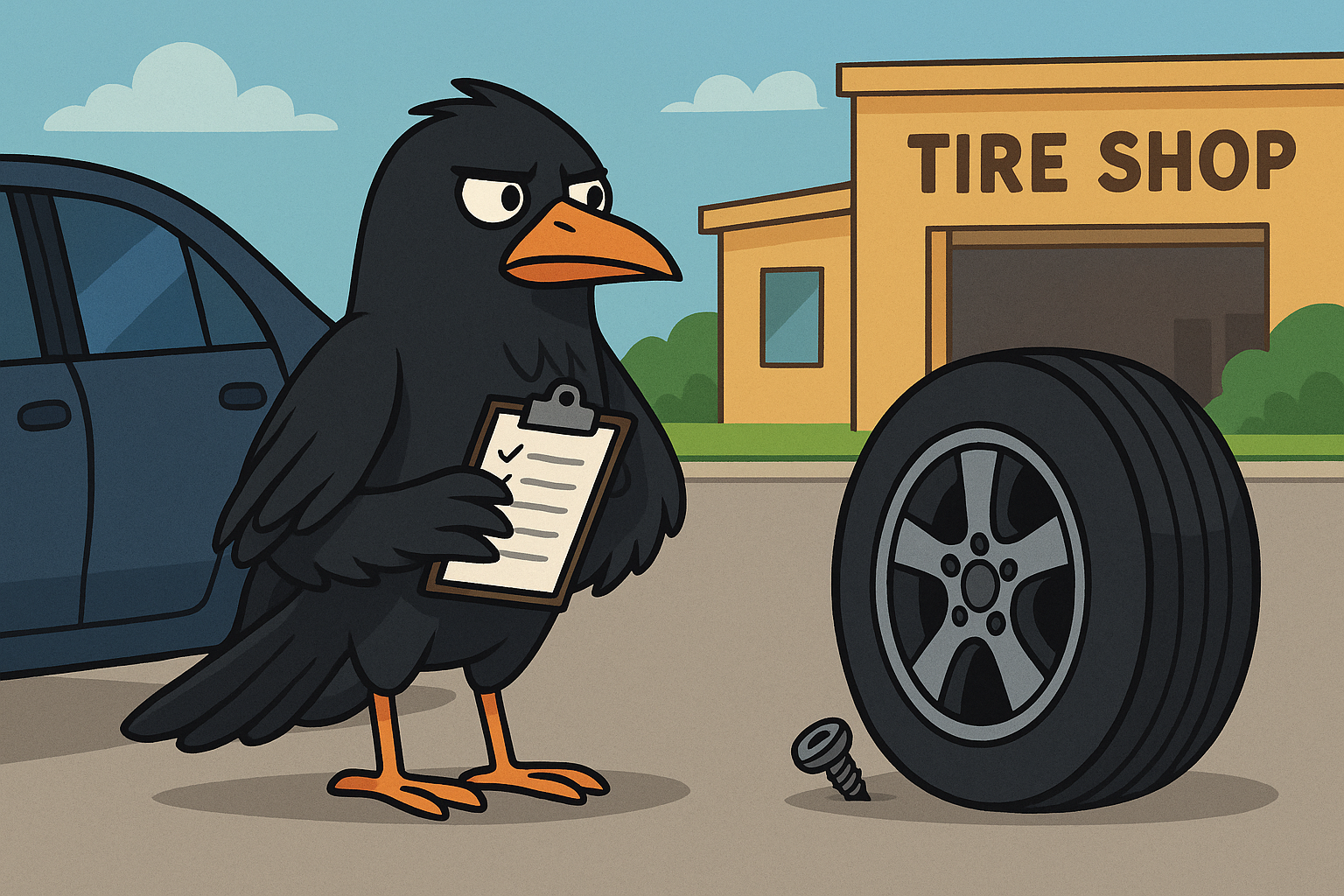
    About five minutes down the road I heard a noise. Checked when I parked. Sure enough: screw in the tire.

    So the plan changed. New plan: go to the tire shop.

    The good news: the tire was patchable and didn’t cost anything.

    And while I was there, they rotated the tires — something I’d been meaning to do for a while but never wrote down.

    And since it was never written down… it never happened.

    Another reminder: If you want it to happen, write it down.

    I still got the important tasks done yesterday. Just not the “get ahead” ones I had in my head when I left the house.

    So I’m calling it a successful day.

    Plus I got a refresher on something I have to remind myself of often:

    You can control what you can control. But something can always show up and blow up your plan.

    I’m not always great in the moment when that happens. But I am pretty good at getting back to execution mode quickly.

    And that’s usually what matters. I accomplished what I needed to accomplish.

    And if something goes sideways?

    I’ll handle it.

    PS — Like I was saying yesterday, negotiation touches every part of your life. If you get better at that, almost everything improves.

    If there’s a negotiation book better than Start With No by Jim Camp, I haven’t found it. I read it once a year.

    It’s less about tricky tactics and a lot more about managing your own behavior and reactions — which is the real game. Just like what happened above.

    If you want to check it out, along with a couple others I recommend, here’s the link:

    (Disclosure: As an Amazon Associate I earn from qualifying purchases. Clicking that link may earn me a small commission, at no extra cost to you.)