Tag: Decision Making

  • It’s a bad idea to try to fix yourself.

    It’s a bad idea to try to fix yourself.

    The end of the Book of Judges is a long, ugly chain of decisions that all trace back to one moment.

    Israel made a vow not to give their daughters in marriage to the tribe of Benjamin. At the time it probably felt justified. Benjamin had done something so evil that the other tribes went to war over it.

    Then the war ended, and the consequences of that vow became clear. Benjamin wouldn’t recover. An entire tribe of Israel would disappear, not because God commanded it, but because of something they said.

    They saw the problem, but they wouldn’t deal with it directly. They could have admitted the vow was wrong and broken it. That would have cost them, mostly in pride, but it would have been clean.

    Instead, they started working around it.

    There was a town that hadn’t joined the war, so they attacked it, killed the inhabitants, and kept about four hundred young women alive to give to Benjamin. That solved part of the problem, if you ignore what they had just done to get there.

    It still wasn’t enough, so they came up with something else. There was a festival at Shiloh, and they told the men of Benjamin to hide nearby and take the women when they came out to dance. That way, technically, Israel wasn’t “giving” their daughters.

    They stacked one decision on top of another, each one designed to protect the original vow, and each one making things worse.

    Most people don’t go that far, but the pattern isn’t hard to recognize.

    We don’t like admitting we were wrong, so we adjust instead. We explain it, justify it, and look for ways to clean it up without ever backing up and saying it shouldn’t have happened in the first place.

    That trade almost always goes the same way. A smaller, honest wrong gets replaced by something bigger that’s easier to defend.

    The instruction from Jesus is simple. Confess.
    Not manage it. Not reframe it. Not work around it.

    Confess, and He will forgive you.
    Even the mess you made trying to fix it.

    The sooner you set aside your pride and say it plainly, the less you usually have to clean up later.

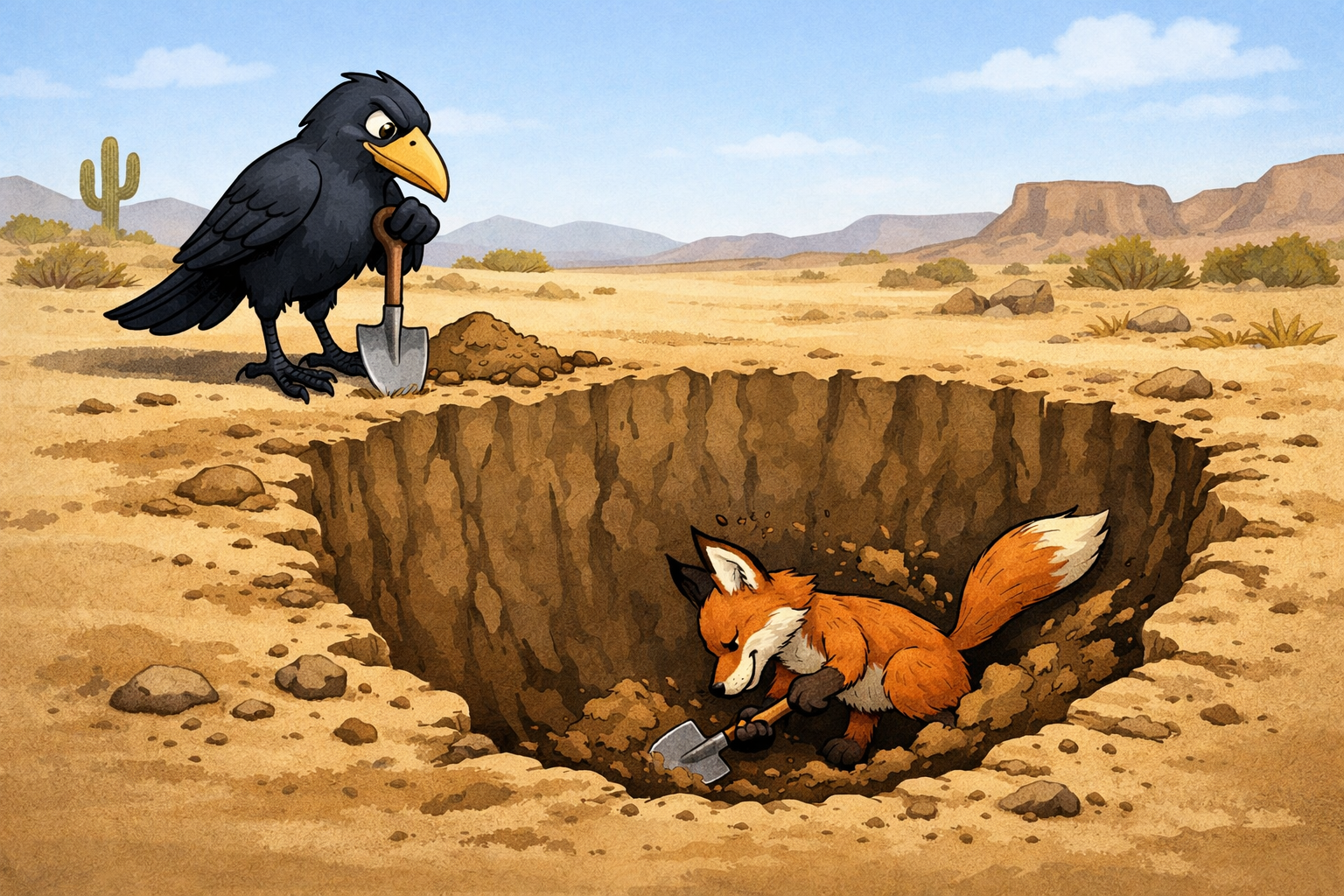
    Or you can keep digging.


    P.S.-If you’d like to read through the Bible this year, you can join us at His Word Together.

    No commentary.
    No telling you what to think.
    Nothing to buy.
    Nothing fancy.

    Just steady time in the Word.

  • You Don’t Have To Do Anything

    You Don’t Have To Do Anything

    One of the differences between highly successful people and everyone else is simple.

    They don’t talk themselves out of things before actually looking at them.

    They don’t act on every idea, but they give themselves permission to take a look before deciding it’s not for them.

    Most of the time, nothing changes. But every once in a while, they find something that creates a meaningful shift.

    If you look back over your own life, you can probably point to a handful of decisions that did most of the work getting you where you are.

    Like who you married. Or a job you took (or decided not to take). Something negative you stopped doing.

    It’s not dozens. It’s a few.

    The difference is, some people give themselves more chances to find those moments.

    If you own lots or land, you’re probably not actively trying to sell it.

    You may not even be thinking about it. Maybe you’ve been told the best move is to hold.

    Or maybe there’s an emotional attachment.

    But when you allow yourself to step back and look at the bigger picture, you might see it differently.

    Or you might not. And that’s fine. The point isn’t to force a decision.

    It’s to give yourself permission to look.

    Are you better off selling and paying down debt?

    Would selling allow you to move into something more useful or better located?

    Or does it make the most sense to leave things exactly as they are?

    In a lot of cases, doing nothing is still the right move. Probably most of the time.

    But you don’t really know until you look.

    And that’s where most people stop.

    Because of what comes next.

    Looking into it usually means talking to someone. And talking to someone usually means starting a process.

    Meetings. Conversations. Follow-ups.

    Dealing with someone who seems to be pushing toward a sale, whether it fits or not.

    Feels a lot like going to a car lot.

    Except this is something you don’t actually have to do.

    So you leave it alone. Not because doing nothing is clearly the best move.

    But because looking into it feels like committing to something.

    That’s the part that doesn’t need to be true.

    You don’t have to sell.

    You don’t have to decide.

    You don’t have to move forward with anything.

    But you are allowed to look.

    You’re allowed to understand what you have.

    What it might be worth. What your options actually are, without it turning into a process you didn’t intend to start.

    Sometimes, after looking at it, the answer is still to do nothing. Sometimes it isn’t.

    But either way, it’s a decision you made on purpose.

    Not something you avoided because you didn’t want to deal with what might come next.


    PS – Another reason people put something like this off is simple. It takes time. You have to gather information, sort through it, and figure out what actually matters. And if you don’t deal with it regularly, you may not even know what to look for.

    But what if you could have that done for you without getting pulled into a sales process on the back end?

    That’s what the MBR Land Reality Check is for. It looks at nearby sales, current listings, development pressure, and the details that affect value but don’t show up in a quick search.

    This is typically something I’d charge for, but I’m offering it at no cost for now.

    If you’ve ever wondered what your property actually looks like in today’s market, this is a straightforward way to find out.


    PPS – If you’re not ready for that but like thinking through land, markets, and negotiation, you can sign up below and get these posts in your inbox.


    Register to Receive Posts Via Email!

    By submitting, I understand I will receive marketing emails and blog posts from Mike Browning Realty and/or associated companies. Unsubscribe at any time.

  • We All Talk a Good Game

    We All Talk a Good Game

    Most people know the right answers.

    Put God first. Don’t chase money. Be content with what you have. You’ll hear all of that from people who mean it when they say it.

    And most of the time, nothing really tests it. It just sits there as something we agree with and repeat back when it comes up.

    Then something real shows up. An opportunity with a big number attached to it that doesn’t quite line up with how we say we want to live. Or a situation where saying no actually costs something. A job. Status. Comfort.

    That’s where things change.

    Not always out loud, but in practice. Because what we do is what we actually believe, not what we say.

    If someone says God told them not to take a shot, then takes it anyway to keep a job, that’s the answer.

    If someone says money doesn’t matter that much, but keeps pushing for more long after they have enough, that’s the answer.

    If someone says they trust God, but panic shows up the second things get uncertain, same thing.

    Most people don’t lie directly. It’s quieter than that. We say the right things, then make decisions that contradict them and don’t even notice the gap.

    The lottery is a clean example. Everyone’s seen how that tends to go. Not every time, but often enough that it’s predictable. People win, and then things start to come apart. Health slips, relationships get strained, the money goes faster than it should.

    It’s not complicated. When you don’t have to say no anymore, most people don’t become more disciplined. They lose whatever discipline they had. And when you can afford anything, saying no to other people gets harder too. That creates a different set of problems that money doesn’t solve.

    None of this is new information.

    But it doesn’t change behavior. People still line up to buy tickets.

    Which tells you something.

    Most of us don’t actually believe what we say we believe, at least not when there’s something in front of us that we want.

    There’s an easy test. Don’t listen to what you say. Watch what you do when it costs you something.

    That’s the part you actually believe.

    If you want to see it in real time, watch how people act when there’s real money or real pressure involved. Or just pay attention the next time you’re standing in line buying a ticket.

    And don’t tell anyone you saw me.


    P.S.– If you’d like to read through the Bible with us this year, you can join at His Word Together.

    No commentary. No telling you what to think.

    Nothing to pay for. Nothing to buy.

    Nothing fancy. Just steady time in the Word.

  • Everything Is Over. Except It Isn’t.

    Everything Is Over. Except It Isn’t.

    When adversity hits, we act like this is the moment.

    If God doesn’t come through here, we’re not going to make it.
    If He doesn’t fix this, everything falls apart.
    If this doesn’t change, it’s over.

    And if we’re being honest, most of the time whatever is bothering us doesn’t get fixed.
    At least not quickly.
    And often not in the way we want.

    So we don’t just hurt.
    We resent.

    At the same time, we say something completely different.

    We say we believe we are destined to spend eternity with God.
    We say that is what we want more than anything.
    We say this life is temporary, and the next one is permanent.

    Those two claims don’t sit well together.

    Because when pressure comes, we don’t act like people who believe eternity is secure.
    We act like people who think this moment is the final verdict.

    We get angry at God.
    We accuse Him of being distant or unfair.
    We act like unanswered prayer means the story has ended.

    That reaction exposes something.

    It’s not that we don’t believe in eternity.
    It’s that we don’t let it govern anything when things get hard.

    Israel did the same thing.

    They had just witnessed deliverance so obvious it left no room for doubt.
    And yet the very next obstacle felt like the end of the world.

    The problem wasn’t that God failed them.
    It was that pain shrank their horizon.

    They couldn’t hold present suffering and eternal promise in the same frame.

    Neither can we.

    If we really believed eternity with God was settled, adversity would still hurt.
    But it wouldn’t feel catastrophic.
    Fear would still show up, but it wouldn’t get to decide what’s true.

    Instead, we act like God owes us rescue now,
    even while claiming to trust Him with forever.

    That contradiction doesn’t make us monsters.
    It makes us exposed.

    It shows how bent we are toward measuring God by immediate outcomes,
    even as we confess long-term faith with our mouths.

    The invitation isn’t to stop caring about this life.
    It’s to stop treating every hard moment like a referendum on God’s faithfulness.

    If everything were really over every time God didn’t fix things on our timeline,
    none of us would still be here.

    But we are.

    Which means God’s story was never as fragile as we act like it is.


    PS – If you want a simple, steady way to stay anchored in what Scripture actually says — especially when life isn’t cooperating — you can read along with us here:

    No commentary.
    No hot takes.
    Just God’s Word, read together, week by week.

  • Most People Don’t Get Stopped. They Stop Themselves.

    Most People Don’t Get Stopped. They Stop Themselves.

    A lot of people spend time wondering if the system’s rigged.
    Whether the economy’s working against them.
    Whether the timing is right.
    Whether someone else is getting all the breaks.

    And maybe sometimes they are.

    But in most cases, that’s not what’s holding people back.

    What holds them back is indecision.
    Overthinking.
    Fear of doing the wrong thing, so they do nothing.
    Waiting for absolute certainty… in a world that never gives it.

    I’ve talked to hundreds of property owners over the years.

    A surprising number reach out, start the conversation, and then vanish — not because the deal was wrong, but because they started spiraling through every possible “what if.”

    What if I regret selling?
    What if I could get more later?
    What if I need this land for something someday?
    What if the market changes?
    What if someone in the family wants it?

    The truth is: they wanted to move on.
    They reached out for a reason.
    They were already halfway through the decision.
    Then they stopped.
    Not because the world said no.
    But because they did.

    And this part is important:

    Until you stop getting in your own way, it doesn’t really matter what the market is doing.

    You won’t move forward until you decide to.

    I’m not in the business of pushing people to sell.

    But I am in the business of helping people move when they’re ready.

    And if you’re not — or you’ve got twenty “what ifs” still hanging out — maybe take a second look in the mirror.

    Because more often than not, that’s the person you need to deal with first.

    PS – You’re probably not ready to buy or sell real estate today. But I’ve found the best time to start preparing for any big decision is well before you’re actually ready to do anything.

    I offer a free, no-obligation opinion of value on any non-residential property.

    It includes real comps, utility and access info, market trends, and any nearby sales activity that matters.

    It’s a concise report that helps you understand where you stand today — and gives you some clarity on what to expect when the time comes.

    By looking at the info now and discussing it with someone who actually understands your market, you make calmer decisions, with fewer regrets.

    Is it a crazy idea to want less anxiety in your life?

  • It’s Not a Vending Machine

    Give, and it will be given back. But not always how you think.

    Luke 6:38 says:

    “Give, and it will be given to you. A good measure, pressed down, shaken together and running over, will be poured into your lap. For with the measure you use, it will be measured to you.”

    That verse is true.

    It’s also one of the most misused verses in the Bible.

    A lot of people read it as a formula.
    Give money.
    Get more money back.
    Preferably a lot more.

    That interpretation sounds appealing.
    It also sounds suspiciously convenient.

    Because if that’s what Jesus meant, the whole thing falls apart under even light scrutiny.

    If giving money reliably produced a guaranteed twenty-fold return, the people preaching it wouldn’t be asking you for money.
    They’d be giving you money.
    They’d be chasing you down to do it.

    The fact that they aren’t tells you something.

    The problem isn’t the verse.
    It’s the assumption that “given back” has to mean “in kind.”

    Jesus doesn’t say you’ll get back the same thing you gave.
    He says it will be given to you.

    Sometimes that’s provision.
    Sometimes it’s peace.
    Sometimes it’s relationships.
    Sometimes it’s freedom from fear, or a loosened grip on money altogether.

    And yes, sometimes it may be financial.
    But that’s not the promise.

    Turning generosity into a transaction misses the point.
    It turns trust into strategy.

    Less scrupulous churches and charities lean on that misunderstanding. Not always maliciously. Sometimes because people want to hear it. But it still takes advantage of the same confusion.

    Giving isn’t a trick to get rich.
    It’s a way of learning who you actually trust.

    If you give expecting a payout, you’re still clinging to control.
    If you give because it’s right, the return takes care of itself.

    Just not always in the way you’d script.

    P.S. If you want to read Scripture regularly, without anyone telling you what to think about it, I also run a separate site called His Word Together. It’s just the readings, posted each week. You can find it here:

  • Accurate Thinking Beats Positive Thinking

    Accurate Thinking Beats Positive Thinking

    Your mindset is simply the way you look at things and how you approach them.

    It matters more than most people want to admit.

    If you believe you can learn, adapt, and figure things out, you’ll usually do better than someone who believes they’re stuck or destined to fail. Not because belief is magic, but because it determines how you act, what you try, and what you dismiss before you ever start.

    Most of this runs below the surface.

    We hear things that sound right and let them in without much resistance. Over time, those ideas start running our decision-making on autopilot. We rarely stop to ask where they came from or whether they actually hold up in the real world.

    Television, social media, teachers, friends, coworkers. All of them install things into our operating system. Sometimes intentional, sometimes not. Either way, it doesn’t matter.

    Once something is installed, we stop treating it like a suggestion and start treating it like reality. We act as if it’s true. And when it’s wrong, we often move backward while feeling justified the entire time.

    A simple example.

    Roughly two-thirds of college students say socialism is better than capitalism. Setting politics aside, ask the obvious question: what evidence did they use to reach that conclusion?

    They didn’t test it.
    They didn’t analyze outcomes.
    They didn’t reason their way there.

    It was told to them by someone they trusted. It sounded compassionate. It felt sophisticated. So it went in unchallenged.

    Installed.

    Now it quietly influences how they think about money, work, responsibility, and incentives. Often in ways that run directly against their own long-term interests.

    This happens everywhere.

    Business is full of unexamined beliefs:

    “Everything is a numbers game.”
    “The early bird always wins.”
    “Whatever doesn’t kill you makes you stronger.”

    Some of these ideas are partially true in narrow situations.

    Others are sloppy generalizations people repeat because they sound wise.

    Bad experiences don’t automatically make you stronger. Plenty of people are damaged by them. Strength comes from how someone responds afterward, not from trauma by default. Believing otherwise can actually lead people to seek chaos or failure as if it’s a growth strategy.

    That’s not resilience. That’s bad thinking.

    Here’s the core point.

    Your belief system governs your outcomes more than tactics ever will. If your beliefs about yourself, money, work, or success are flawed, you’re operating with a handicap.

    The fix isn’t positive thinking.

    The fix is accurate thinking.

    That means slowing down when you hit resistance in your own beliefs and asking hard questions. Where did this idea come from? What evidence supports it? Where does it break?

    Anything added to your belief system should earn its place.

    If a belief can’t survive contact with reality, it doesn’t deserve to run your life.

    If you value clear thinking and straightforward talk, you can get more like this in your inbox here:

    PS — If you know someone who might benefit from this kind of thinking or straightforward real estate talk, feel free to forward it.

  • Saying the Time Isn’t Right is a Copout

    Saying the Time Isn’t Right is a Copout

    I see this a lot.

    People waiting for the “right time” to do something they already know they should probably do.

    Start a business.
    Make a change at work.
    Learn a skill.
    Deal with an issue they’ve been stepping around for years.

    They’ll say things like:

    “I just need things to slow down a bit.”
    “After this busy stretch.”
    “Once the kids are older.”
    “When work settles.”
    “After the holidays.”

    All of that sounds reasonable. It even sounds responsible.

    Most of the time it means the same thing.

    “I don’t want to deal with the discomfort yet.”

    I’m not saying that to be harsh. I get it. I do the same thing sometimes, even though I know it’s not ideal.

    Starting something new is uncomfortable.
    You don’t know what you’re doing yet.
    You might waste time or money.
    You might find out the problem is bigger than you hoped.

    That part is real.

    What people miss is that avoiding discomfort doesn’t remove it. It just replaces it with a quieter version.

    The kind where nothing is technically wrong, but nothing really changes either.
    The kind where one unexpected expense puts you on edge.
    The kind where you tell yourself you’re fine, but you know you’re boxed in.

    That kind of discomfort compounds. Slowly at first. Then all at once.

    There is no point where life calms down and hands you perfect conditions. Responsibilities don’t shrink. They stack.

    The people who make progress aren’t braver or smarter. They just decided the discomfort of staying put was worse than the discomfort of starting.

    A lot of people tell me they are never going to sell their real estate.

    That’s fine. I’m not here to talk anyone into anything.

    But things change.
    Health changes.
    Family situations change.
    Tax rules change.
    Priorities change.

    Sometimes selling makes sense to solve a current problem.

    Sometimes it makes sense to head off a future one, like family arguing over something that was never clearly thought through.

    And the best time to prepare for those possibilities is long before you actually need to do anything.

    That’s why I offer a free, no-obligation analysis on any acreage or lots.

    No pressure.
    No listing agreement.
    No sales pitch.

    Just a clear look at what you own, what it’s realistically worth, and what your options are if circumstances change later.

    If you never use it, that’s fine.
    If you’re glad you had it when you needed it, even better.

    Can anything bad happen by just looking into it?

  • It Doesn’t Help Anyone If You Leave It In the Box

    It Doesn’t Help Anyone If You Leave It In the Box

    I tend to make a big deal about how important it is not to procrastinate. Just get started.

    Do the thing when you think of it instead of putting it off.

    It almost never hurts to do something a little earlier than you absolutely have to, instead of waiting until the last minute.

    So I’m going to tell on myself.

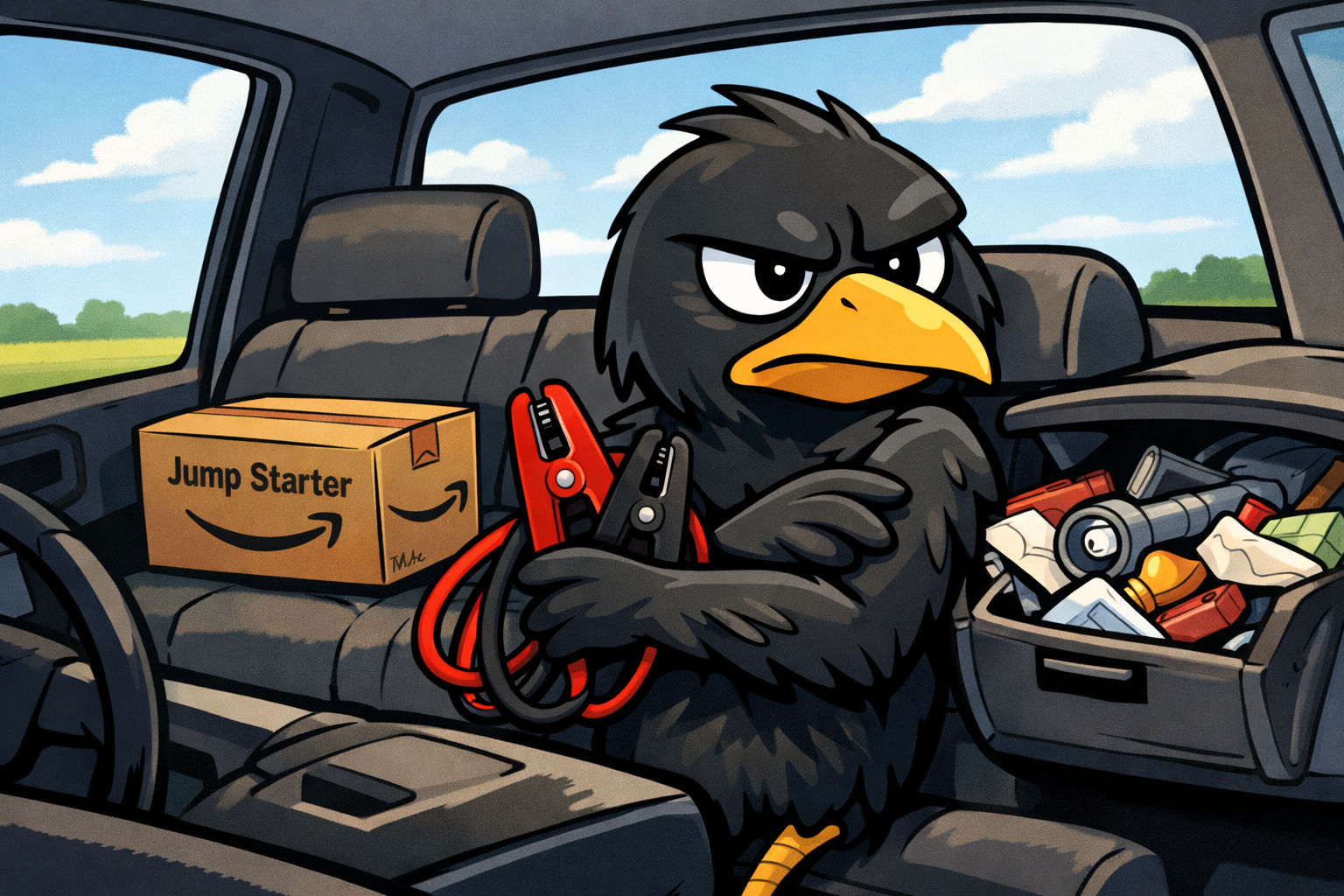
    A while back, for my birthday, my dad bought me a portable car battery booster. One of those little jump-start packs. I didn’t even know I wanted it, but he got it for me, I said thanks, and that was that.

    Fast forward to a few days ago. One of my daughters called and said her battery was dead. And where was that booster?

    Still sitting in the original Amazon box in the back seat of my truck.

    Now, I’ve got jumper cables, so it wasn’t the end of the world. But it would have been easier. And that’s the point.

    Low-risk example. Same lesson.

    Normally I wouldn’t bother mentioning the booster itself because it has nothing to do with real estate. But these things are actually great.

    It fits in a small bag. You carry it in one hand. If your battery is dead, you hook it up and start the car. No second vehicle. No asking strangers for help.

    No waiting around in a parking lot hoping someone stops.

    I’m probably going to buy one for all my kids.

    My daughters especially worry about being stuck somewhere and having to deal with people they don’t know. If they’ve got one of these, they don’t need anyone. It’s just handled.

    You can also charge your phone with it. It charges by USB, so you can plug it in while you’re driving. It’s got a flashlight built in too.

    It’s not much more expensive than a decent set of jumper cables, and it takes up less space than most glove box junk.

    They’re just useful.

    If you’ve got kids, it will give you peace of mind.

    If you have one already, don’t be like me. Take it out of the box. But if not, go buy one and actually use it.

    You can get the same one I have from Amazon at the link below.

    Or buy a nicer one. I don’t care. Just don’t leave it sitting in the box like I did.

    Disclosure: As an Amazon Associate I earn from qualifying purchases. That means if you buy something—anything—after clicking that link, I may receive a small commission. It doesn’t change your price.

  • Like You’re Not Even Playing the Same Game

    Like You’re Not Even Playing the Same Game

    Continuing from yesterday’s note about New Year’s resolutions.

    One thing a lot of people say they’re going to do every year is read a certain number of books. And most of them don’t. I usually don’t either.

    I tend to aim pretty high, and even when I miss, I probably still read more than most people. But that’s not the point.

    If you’re one of those people who says you’re going to read more this year, and the iron is still hot while you’re still motivated, here’s a suggestion: Start With No by Jim Camp.

    It’s a book about negotiation, but not in the way most people think about negotiation.

    It’s not about bullying people.

    It’s not about tricks or pressure or “winning” by force.

    It’s a system. A counterintuitive one. And if you actually use it the way it’s meant to be used, it removes a lot of the stress and friction from deals.

    Once you really understand it, it can feel like you’re playing a completely different game than the person across the table.

    Unless they’ve read it too. In that case, things get even easier. You either make a deal that works for both sides or you don’t. No drama. No wasted time.

    I read it at least once a year. At this point I’ve almost got it memorized, and I still re-read it. That’s how useful it is.

    And it’s not just for business.

    Everything is negotiation.

    Getting your kid to go to bed on time.
    Deciding where you’re going to eat.
    Whether a police officer gives you a ticket.

    All of it.

    When you get better at negotiation, your entire life improves, not just your income or your career.

    So if you’re going to read one book while the motivation is still there, start there.

    Click below to go to my Recommended Reading page. You can order it through Amazon there.

    Disclosure: As an Amazon Associate, I earn from qualifying purchases. This does not change the price you pay. It simply helps support the site.