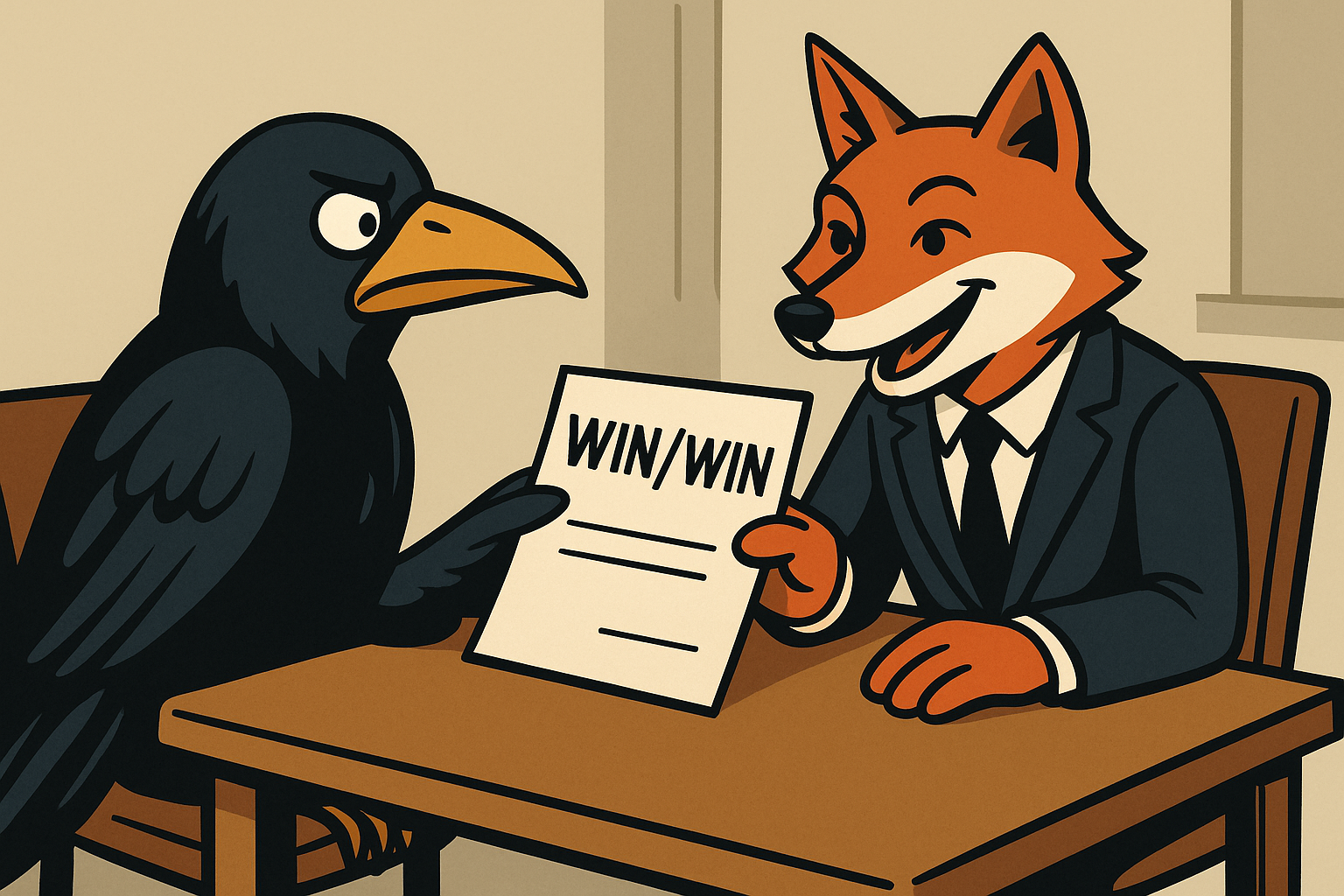
Don’t let a tool become your boss.
On Wednesday I wrote about how someone can sound pretty smart to people who know less than they do. At least until an actual expert walks into the room.
Most of the time it’s harmless, or close enough for government work. Nobody is really acting on what these people are saying, so a little error doesn’t matter much.
But if they did act on it, things could get expensive.
There’s a term for it: knowing just enough to be dangerous.
It’s hard to go anywhere today without hearing somebody talk about AI.
Depending on who you ask, AI is either going to make everyone rich, put everyone out of work, or both.
I don’t know.
But it’s obviously making the “knowing just enough to be dangerous” problem worse.
This week Dan Kennedy mentioned a commercial real estate investor who was bragging that he had delegated all the due diligence on a deal to AI and got an answer in eight and a half minutes.
The investor thought this was wonderful.
Kennedy’s response was simple:
“Have you ever done the same analysis yourself and compared the two?”
That’s the right question.
Because there are really two kinds of people using AI right now.
The first group is using it to avoid doing the work.
Those people are headed for trouble, and you should avoid doing business with them if you notice it.
Not because AI is always wrong. It’s not.
But because they have no reliable way to know when it’s wrong.
And if they keep relying on it, eventually they won’t know how to do the work without it.
Think about navigation in your car. Most people can still get around, but they’re not nearly as good at it as they used to be. The skill slowly deteriorates because they stopped using it.
The same thing can happen with analysis, writing, valuation, negotiation, or anything else.
If you’re not careful, before long you’re no longer using the tool. The tool is using you.
You’re just accepting answers instead of evaluating them.
It won’t bite you every time.
But it doesn’t have to.
The people getting the most value from AI tend to use it differently.
They’re still doing the thinking.
They’re still forming opinions.
They’re still responsible for the answer.
I use AI for things. I’d be crazy not to.
But I’m using it to enhance and accelerate what I was already doing, not as an easy button like on the commercials.
I’m able to create better reports and information for people, much faster than I could a year ago.
Not because the AI is doing the work.
Because I’m still doing the work.
It helps organize information. It can challenge assumptions. Sometimes it points out something I missed. Sometimes it’s right. Other times I tell it to shove off.
But it isn’t making the decision.
I am.
There’s a difference between using a tool to augment what you’re doing and letting the tool do all the work.
Right now those two people can look very similar.
Give it a few years.
They won’t.
PS – Most landowners are not planning to sell today.
But markets change. Development pressure changes. Buyer demand changes too.
The people who make the best decisions usually aren’t the ones scrambling to learn everything at the last minute. They’re the ones who already have a pretty good idea of what’s happening around them.
That’s what the MBR Land Reality Check is for.
It looks at nearby sales, competing properties, market activity, and the factors affecting value that are easy to miss if you don’t spend much time in the land business.
Is it a bad idea to know where things stand?
PPS – If you’re not ready for a Land Reality Check but enjoy reading about land, negotiation, markets, and how business actually works in the real world, you can sign up below and get future posts in your inbox.
No hype.
No sales funnel.
Just new posts when I write them.