Tag: Biblical Reflection

  • In Defense of Doubting Thomas

    In Defense of Doubting Thomas

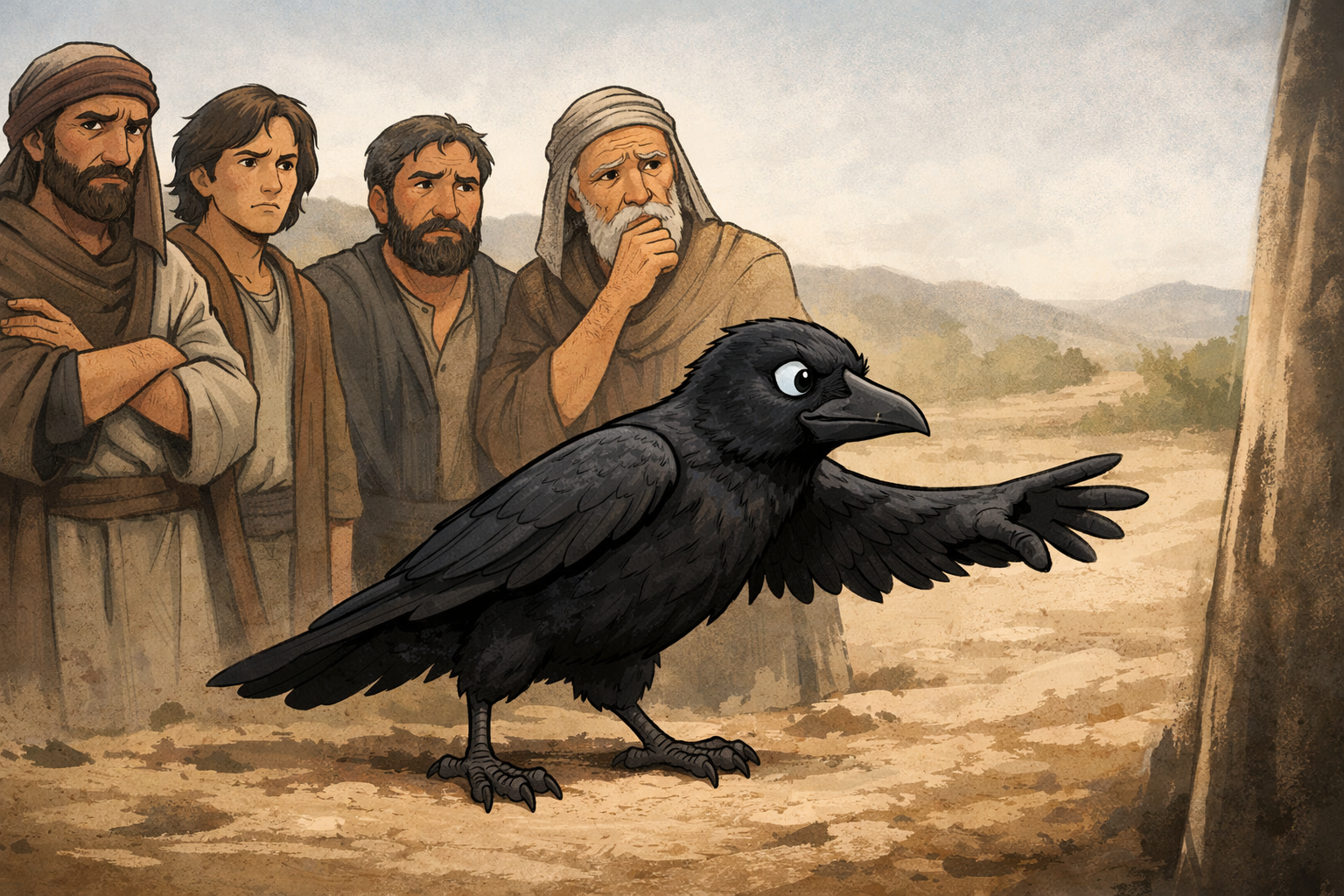
    Thomas gets singled out.

    That’s how the story is usually told. Everyone else believed, Thomas didn’t, and he needed proof.

    But that’s not really what happened.

    The other disciples didn’t believe at first either. When the women came back and told them the tomb was empty, they didn’t take it at face value. Luke says it sounded like nonsense to them. Peter ran to check for himself.

    And later, two of them walked with Jesus for miles on the road to Emmaus. He explained things to them in a way only He could, and they still didn’t recognize Him until afterward.

    And this wasn’t coming out of nowhere. Jesus had told them ahead of time what was going to happen. More than once. They had heard it and still had a hard time putting it together when it actually happened.

    That’s the part that gets skipped.

    These weren’t outsiders. These were the same men who had been with Him, and even they didn’t immediately understand what they were seeing.

    Thomas just wasn’t there the first time Jesus appeared to the group.

    So when they told him, he responded the same way they had, just more directly. Unless I see it, I’m not going to believe it.

    He said it out loud. That’s the difference.

    Then comes the line people remember.

    “Blessed are those who have not seen and yet have believed.”

    It’s often used like a quiet rebuke of Thomas, but that doesn’t really fit either.

    It wasn’t describing the other disciples. They had already seen.

    It was pointing forward, to everyone else who wouldn’t get that moment. No room, no wounds to touch, no direct proof in front of them.

    That’s today.

    Not in the room. Not seeing it directly. Hearing about it and deciding what to do with it.

    And it’s not an easy thing to believe.

    The people closest to it struggled with it, even after being told in advance. Now it’s often treated like a simple statement. Something people say without stopping on what it actually means.

    A man was executed in a brutal way, buried, and then came back to life.

    We say we believe that.

    But sometimes it sounds more like we’ve gotten used to saying it than actually thinking through it.

    Thomas asked to see.

    He wasn’t the only one.


    P.S.- If you’d like to read through the Bible this year, you can join us at His Word Together.

    No commentary.
    No telling you what to think.
    Nothing to buy.
    Nothing fancy.
    Just steady time in the Word.

  • Worse Than Even I Thought

    Worse Than Even I Thought

    Last week I wrote about how we are not “good enough.”

    Not close.

    Numbers in the Old Testament prescribed sacrifices for sins people committed without even knowing it.

    Jesus raised the standard higher.

    If you look with lust, you’ve committed adultery in your heart.
    If you harbor anger, you’re in danger of judgment.

    Paul says in Romans there is none righteous. Not one.

    God’s standard is perfection.

    One sin disqualifies you.

    And we all know, if we’re honest, we can’t go very long without messing up.

    But here’s what I did not expect.

    Vox Day wrote a working paper called Quantifying the Fall of Man that attempts to test the doctrine of Original Sin against behavioral data.

    Day only included sins clearly condemned in the New Testament.

    Lying.
    Lustful thought.
    Sinful anger.
    Envy.
    Dishonesty.
    Gossip.

    No ceremonial law.
    No disputed edge cases.
    No sins of omission.

    And he used the lowest available numbers from peer-reviewed studies. Mostly self-reported data, which likely underestimates everything.

    The conservative floor?

    4.33 sins per person per day.

    That’s the minimum.

    From age 3 to age 78, using those conservative inputs, that comes out to about 114,000 sins in one lifetime.

    That’s the floor.

    A more realistic estimate would push past 250,000.

    Now here’s where it gets uncomfortable.

    What are the odds of going one full day without committing one of those sins?

    About 1 in 1,190.

    So maybe three sinless days per decade, if you’re average.

    Encouraging?

    Not really.

    Because the probability of stringing together 27,000 of those days in a row is effectively zero.

    On the order of 10 to the negative eighty-something power.

    In plain English:
    Across roughly 112 billion humans who have ever lived, the expected number of naturally sinless lives is zero.

    Not “unlikely.”
    Zero.

    And remember, this excludes sins of omission.
    It excludes pride.
    It excludes ingratitude.
    It excludes the full force of the Sermon on the Mount.

    We are not just slightly flawed.

    We are mathematically incapable of pulling this off ourselves.

    That should end the political fantasies.

    Elect the right people.
    Pass the right laws.
    Fix the system.

    It doesn’t solve the core problem.

    The problem is upstream.

    The distribution never reaches zero.

    There has only been one exception.

    And if the math is right, that exception cannot be explained by natural human variation.

    Which is exactly what Christianity has claimed from the beginning.

    Here’s the good news.

    Jesus does not require you to fix yourself before coming to Him.

    That would defeat the entire point.

    You can’t clean yourself up enough.

    Just come.


    P.S. If you’d like to read through the Bible with us this year, you can join at His Word Together.

    Nothing fancy. Just steady time in the Word.

  • The Part Nobody Sees Is the Part That Matters

    The Part Nobody Sees Is the Part That Matters

    A couple of weeks ago I was reading in Exodus as part of the yearly Bible reading plan at HisWordTogether.com, and I noticed something I hadn’t before.

    Whenever God gave the Israelites very specific, technical instructions, they nailed it.

    Build the tabernacle this way.
    Use these materials.
    These measurements.
    These colors.
    These garments for Aaron.
    This order.
    This process.

    And they did it. Immediately. Precisely. No drama.

    The pattern repeats throughout Exodus. When the instructions are detailed, external, and easy to verify, compliance is almost perfect.

    But when God gives instructions that are internal, harder to measure, and impossible to check off, that’s where things start to break down.

    Worship Me only.
    Trust Me.
    Do not turn to other gods.
    Do not harden your heart.

    Those commands come with no measurements.
    No checklist.
    No visible progress bar.
    No way to prove you are done.

    And before God is even finished speaking, they are melting gold and building a calf.

    It is tempting to read that and think, how could they be so dense?

    But we do the same thing.

    We love rules that are clear, concrete, and external.
    Tell me exactly what to do and how to do it, and I am in.
    Give me something I can complete, track, and point to, and I will work hard at it.

    But tell me to examine my motives.
    To surrender control.
    To trust instead of hedge.
    To obey when it costs something internally.

    That is where resistance shows up.

    Because those things cannot be tallied.
    You cannot fake them for long.
    And you cannot outsource them.

    It is easier to build something impressive for God than it is to quietly submit to Him.
    Easier to perform obedience than to actually live it.

    And the uncomfortable truth is this: we often prefer visible faithfulness over real faithfulness.

    One can be admired.
    The other often cannot be seen at all.

    That was true in Exodus.
    It is true now.
    And it is something worth sitting with.

    Not fixing.
    Not resolving.
    Just noticing.

    Because the parts of faith we struggle with most are usually the parts that matter most.

    PS –I mentioned HisWordTogether.com above. It’s a site I run that helps you read through the Bible in a year, spending about twenty minutes a day or less.

    It’s completely free. There’s no commentary, no spin, and no one telling you what to think. Just the readings, posted weekly every Sunday. You can sign up to have them emailed to you, or just check the site when you want.

    There’s no need to wait until January. Just start where we are and keep going.

    For a long time, I heard people confidently telling others what the Bible “says” about this or that. Until I started reading it myself, I had no real way to know whether they were right. Even when it sounded fishy.

    Turns out, a lot of the time they either do not know what they are talking about, or they are not being honest.

    Is it a crazy idea to want to know what the most famous book of all time actually says?