Category: Uncategorized

  • Most Landowners Aren’t Stuck. They’re Just Not Looking

    Most Landowners Aren’t Stuck. They’re Just Not Looking

    Some landowners are genuinely stuck.

    Most aren’t. They just haven’t looked at things in a while.

    Sometimes that’s because they don’t want to see what’s there. Other times life just moves on.

    They bought it with some kind of plan. Build later. Hold it long term. Maybe sell when the area catches up. Then the property slides into the background.

    A few years go by. Then a few more.

    At some point it stops being something they’re actively managing and turns into something they just own.

    That’s where things start to drift.

    Because the land didn’t freeze in place when they stopped paying attention to it. Everything around it kept moving. Development shifts. Prices move. Buyer demand shows up in pockets, then disappears. Infrastructure gets extended in one direction and skipped in another.

    Sometimes the property quietly gets better.

    Sometimes it doesn’t.

    If you’re not paying attention, you don’t know which one you have.

    So people settle into a simple explanation. “I’m just holding it.”

    That sounds like a decision, but most of the time it isn’t. It’s just inactivity dressed up as a plan.

    Holding can be the right move. Selling can be the right move. Reworking it, splitting it, or just waiting for a different window can all make sense depending on what’s actually happening around the property.

    But all of those require the same first step. You have to look at it as it sits today, not how it looked when you bought it.

    That’s the part people skip.

    Not because they can’t do it. Because once they do, they might have to make a decision they’ve been putting off.


    PS- Most landowners are not planning to sell today.

    But things change. Sometimes faster than expected. When they do, the people who already understand what they own tend to make better decisions than the ones starting from scratch.

    That’s what the MBR Land Reality Check is for.

    It looks at nearby sales, current listings, development pressure, and the details that actually move value, not just what it looks like from the road.

    Is it a bad idea to know where things stand?


    PPS- If you’re not ready for that but like reading about land, markets, and how these decisions actually play out, you can sign up below and get these posts in your inbox.

    Register to Receive Posts Via Email!

    By submitting, I understand I will receive marketing emails and blog posts from Mike Browning Realty and/or associated companies. Unsubscribe at any time.

  • Waterstone, Worth a Look

    Waterstone, Worth a Look

    If you build or sell custom homes in northern DFW, this is a straightforward one to look at.

    One acre in Waterstone Estates, northeast of McKinney. The neighborhood requires a minimum build of 3,500 square feet, which keeps the overall product consistent.

    If you build in the area already you know this is a higher end subidivision. If not, but you have customers or clients interested in Collin County, this is a great option.

    Can currently be purchased for $279,000 (Buyer to pay all closing costs other than sellers agent commission).

    That’s the basic framework. Beyond that, it’s just a matter of whether it fits what you’re working on right now.

    Photos and aerials are below so you can get a quick read on it.

    If you want to walk the lot, just let me know ahead of time and I’ll coordinate access.

    P.S. If you want to see more like this as they come up, you can sign up here and get them by email.

    Register to Receive Posts Via Email!

    By submitting, I understand I will receive marketing emails and blog posts from Mike Browning Realty and/or associated companies. Unsubscribe at any time.

  • Never Ask a Barber If You Need a Haircut

    Never Ask a Barber If You Need a Haircut

    And be careful asking a real estate agent if it’s a good time to sell.

    You already know how agents get paid.
    Property sells, they get a commission. If it doesn’t, they don’t.

    That part isn’t confusing.

    What people don’t always think through is what that does to the conversation before anything sells.

    Most brokers give out information upfront.
    Valuations, pricing opinions, strategy.

    I do it too.

    It looks free, and in a narrow sense it is. You’re not writing a check for it.

    But it’s not neutral.

    If someone only gets paid when something sells, their advice is going to lean that way. Not because they’re lying. Because that’s how the structure works.

    List it.
    Price it.
    Get it done.

    You’ll hear about timing, positioning, exposure. A lot of that is right.

    What you won’t hear as much about is doing nothing. Holding. Waiting. Changing the plan in a way that doesn’t lead to a quick transaction.

    Those paths don’t pay.

    So they don’t get the same attention.

    That doesn’t make the broker bad. It just means you should understand what’s driving the advice.

    In my case, I’m in the same model. I get paid when something sells.

    But I’m not in a position where every conversation has to end there. I can tell someone to sit still when that’s the better move.

    A lot of brokers can’t.

    If the only path someone lays out for you ends in a listing, it’s worth noticing.

    Not arguing. Not accusing.

    Just noticing.

    And asking yourself one question.

    Would this still make sense if I didn’t sell?


    PS – Most landowners aren’t planning to sell today.
    But situations change, and when they do, the people who already understand their position tend to make better decisions.

    That’s what the MBR Land Reality Check is for.
    It looks at nearby sales, current listings, development pressure, and the details that don’t show up in a quick search.

    Is it a bad idea to know where things stand?


    PPS – If you’re not ready for that but like reading about land, markets, and negotiation, you can sign up below and get these in your inbox.

    Register to Receive Posts Via Email!

    By submitting, I understand I will receive marketing emails and blog posts from Mike Browning Realty and/or associated companies. Unsubscribe at any time.

  • Who Do You Know That Owns Land?

    Who Do You Know That Owns Land?

    Most people don’t see themselves as someone who knows landowners. But if you stop and run through it for a minute, a few names usually come to mind.

    Someone who bought a lot years ago and never built. Someone who inherited property. A colleague who picked something up as an investment. A neighbor with acreage outside the city.

    It doesn’t come up often, so it’s easy to forget. But it’s more common than people think.

    And when it does come up, it usually sounds the same.

    They’ve had it for a while. They’re not sure what it’s worth today. And they don’t really know what they should do with it.

    That’s where most of my conversations start.

    Not with a big decision. Just a simple question.

    “Do you think it makes sense to sell this?”

    Sometimes the answer is yes. Sometimes it’s no. A lot of the time it’s just a matter of laying out what the options actually are.

    Most people aren’t looking for a sales pitch. They’re trying to get their bearings.

    If you happen to know someone in that spot, don’t forget that you already know someone who can point them in the right direction without taking advantage of the situation.

    I’ll take a look at it and give them a straightforward opinion on what it’s worth and what their options look like. No pressure, no obligation, just a conversation.

    That’s how most of the people I end up working with find me anyway.


    PS- Most landowners aren’t planning to sell today.

    But when the question does come up, it helps to have someone they can talk to without feeling pushed into a decision.

    If someone came to mind while you were reading this, feel free to send it to them.

    And if you want to get a sense of where things stand on your own property, you can do that here:

    It’s free, and never any pressure to list.


    PPS- If you’re not ready for a Reality Check but like reading these, you can sign up here.

    Register to Receive Posts Via Email!

    By submitting, I understand I will receive marketing emails and blog posts from Mike Browning Realty and/or associated companies. Unsubscribe at any time.

  • Nothing To Add

    Nothing To Add

    If you’re here looking for some different angle of reflection, you’re not going to find it today. I’m not sure anyone ever does.

    If you haven’t already and it’s still early enough, get to church and celebrate the resurrection of our Lord and Savior Jesus Christ.

    Or spend time with your family and sit with the fact that what you couldn’t do yourself has been done for you.

    Nothing to add to it.

    You accept it.

    He is risen.

    He is risen indeed.


    P.S. If you’d like to read through the Bible this year, you can join us at His Word Together.


    No commentary.
    No telling you what to think.
    Nothing to buy.
    Nothing fancy.
    Just steady time in the Word.

  • “We Never Felt Pressured”

    “We Never Felt Pressured”

    A lot of people won’t say this directly, but it’s usually sitting in the background.

    “Am I going to get pushed into something?”

    They’ve seen it before. Maybe not with land, but somewhere. A situation where the timeline feels artificial, the information is just incomplete enough, and the whole thing starts to feel like persuasion instead of guidance.

    The feeling you get when you’re on a car lot.

    Once that shows up, trust is already gone.

    Selling land shouldn’t feel like that. I try to handle it so it doesn’t.

    If the process is handled correctly, you should understand what you have, what it’s worth, and what your options look like without anyone leaning on you to move faster than you want to.

    That’s how I like to do it. If anything, I’m usually slowing things down at the beginning, making sure before we go to market that it’s actually what you want to do.

    Because once it’s time to go, I go full speed.

    There’s no upfront cost to you, but it’s not free for me to get a property on the market properly. Time, money, effort. So I want to make sure we’re aligned before that switch gets flipped.

    Price expectations make sense. You know who the likely buyers are and what they’re going to need in terms of time to perform. When those pieces line up, people don’t need to be pushed. They move forward because the decision holds up on its own.

    I’ve heard some version of this more than a few times, even when people don’t say it directly.

    It shows up in how they describe the process afterward.

    “Very professional, prompt response, reliable, honest advice about what offers were good.”

    Or:

    “It was a very pleasant and smooth process to my relief.”

    That last part tends to stick.

    Relief.

    Most landowners don’t do this often. They’re trying to make a good decision without missing something, and without getting walked into something they don’t fully understand.

    Pressure usually shows up when something doesn’t hold together on its own. Either the numbers don’t make sense, or the person explaining them knows it.

    If everything is clear, there’s nothing to push.

    If you’re looking at selling and want to understand what your options actually look like, that part should come first.

    The decision can wait.


    PS – Most landowners aren’t planning to sell today.

    But when the time comes, the ones who already understand what they have and how the market sees it tend to make better decisions.

    That’s what the MBR Land Reality Check is for.

    It looks at nearby sales, current listings, and the factors that actually drive value, so you’re not guessing or relying on someone else’s opinion when it matters.

    Is it a bad idea to know where things stand?


    PPS– If you’re not ready for a Reality Check but like reading about land, pricing, and negotiation, you can sign up below and get these posts in your inbox.

    Register to Receive Posts Via Email!

    By submitting, I understand I will receive marketing emails and blog posts from Mike Browning Realty and/or associated companies. Unsubscribe at any time.

  • “We Thought It Might Never Sell”

    “We Thought It Might Never Sell”

    A lot of landowners quietly assume the same thing. This property probably isn’t going to sell.

    So they don’t even try.

    Maybe it’s been sitting for years. Maybe there hasn’t been much activity nearby. Sometimes it just feels like one of those properties that never quite moves, so it sits there year after year.

    In most cases, it’s not because there’s no demand. It’s because the property isn’t positioned in a way that lets demand find it.

    I’ve watched this happen enough times that it’s hard to miss. The price is off just enough to keep serious buyers away. The right buyers never see it. Or it’s presented in a way that doesn’t give anyone a reason to act. Nothing dramatic, just enough friction to keep it stuck.

    There’s another pattern that shows up too. A property sits, looks dead, nothing happening. Then it gets repositioned and all of a sudden there’s movement. Sometimes fast.

    Not always. But often enough that it’s not random.

    I’ve seen this happen many times.

    In one case, a property owner had a lot they believed might never sell.

    Here’s how they described it:

    “Mike contacted us about a lot we owned, which we thought might never sell. We listed with Mike, and the property SOLD in just three weeks! We could not be happier!”

    There’s nothing unusual about that outcome. But it’s not guaranteed, and that’s not the point.

    The point is the property didn’t change. The positioning did.

    Most people focus on the dirt itself. Location, size, what’s around it. That matters, but it’s usually not the deciding factor.

    How it’s brought to market matters just as much, sometimes more. That part is controllable.

    If you’ve got something that’s been sitting, it’s worth asking whether it’s actually unsellable, or just stuck the way it’s currently being presented.

    Most of the time, it’s the second one.


    PS- Most landowners are not planning to sell today.

    But when the time comes, the people who already understand how their property fits into the market tend to have a much easier time.

    That’s what the MBR Land Reality Check is for. It looks at nearby sales, current listings, and the details that affect whether something actually moves.

    Is it a bad idea to know where things stand?

    PPS- If you’re not ready for that but like reading about land, markets, and negotiation, you can sign up below and get these posts in your inbox.

    Register to Receive Posts Via Email!

    By submitting, I understand I will receive marketing emails and blog posts from Mike Browning Realty and/or associated companies. Unsubscribe at any time.

  • Nobody Hits A Home Run Every Time

    Nobody Hits A Home Run Every Time

    When people buy land, there’s usually a plan attached to it.

    Build someday. Or just hold it. Maybe it just felt like a good move at the time.

    And underneath all of that, there’s an assumption that rarely gets said out loud. The property will go up enough to make it worth it.

    Sometimes it does. In North Texas, it usually has.

    I’ve seen plenty of people look smart just by sitting on something for a few years. Right place, right timing.

    Other times it just sits there, quietly costing money.

    That part gets ignored more than it should.

    Developed lots are the easiest example. Taxes, HOA dues, mowing, basic upkeep. It adds up faster than people expect. Five thousand a year is not unusual, and that’s before you factor in any debt.

    So now the property isn’t just “not performing.” It’s working against you unless it’s appreciating enough to cover the bleed.

    Most people don’t run that math. Or they do, but only once.

    There’s also the part nobody likes to look at. What that money could be doing somewhere else.

    Every dollar tied up in dirt is a dollar that isn’t doing anything else. That’s fine if the land is carrying its weight. It’s different when it’s not.

    At some point the question changes.

    Not what did I hope this would do, but what is it doing right now?

    That’s usually where the decision actually gets made.

    I worked with a lot owner who had been sitting on his property for about ten years. He planned to build when he bought it. Life went a different direction.

    Here’s how he described it:

    “I had owned the lot for 10 years and decided to sell due to low ROI. One of my main concerns was being able to make a profit from the sale. Mike was very professional and convenient to work with, and his strong knowledge of the area, the sales process, and his guidance throughout stood out to me. The final outcome was beyond my expectations. I would highly recommend Mike to help with any property needs.”

    There’s nothing unusual about that situation.

    Plans change. Time passes. The numbers stop making sense.

    The mistake is thinking you’re supposed to ride it out forever just because you’ve already been in it this long.

    That’s how people end up holding things that stopped working years ago.

    Sometimes the right move isn’t squeezing every last dollar out of it. It’s stepping back, cleaning it up, and putting the capital somewhere that actually does something.

    Most people already know when they’re there.

    They just don’t like admitting it.


    PS- Most landowners are not planning to sell today.

    But situations change, and when they do, the people who already understand what they own tend to make better decisions.

    It may be that the right move is to keep holding, especially if the lot market picks back up. But you don’t really know that without looking at the details.

    That’s what the MBR Land Reality Check is for.

    It looks at nearby sales, current listings, and the details that actually move value.

    Is it a bad idea to know where things stand?


    PPS – If you’re not ready for that but like reading about land, markets, and how this stuff actually works, you can sign up below and get these posts in your inbox.

    Register to Receive Posts Via Email!

    By submitting, I understand I will receive marketing emails and blog posts from Mike Browning Realty and/or associated companies. Unsubscribe at any time.

  • It Doesn’t Have To Be Complicated

    It Doesn’t Have To Be Complicated

    Most landowners assume selling property is going to take a lot of time and effort.

    They’ve usually seen enough to believe that. There are a lot of moving parts. Pricing, marketing, negotiations, due diligence. None of it is complicated on its own, but it stacks up and tends to show up all at once.

    So people expect to be tied to it. Phone calls, emails, decisions every day.

    Sometimes that’s true. But usually it isn’t, if things are handled correctly.

    I worked with a landowner who had owned a lot for about seven years. He planned to build, then didn’t.

    The main concern wasn’t whether it would sell. It was whether it would be positioned correctly from the start.

    Here’s how he described it after the fact:

    “Great. Mike was on top of the entire process. He knew the market. It was priced appropriately to sell it. Instantaneously we had 3 offers. Mike outlined all 3 and negotiated what we felt was the most solid offer. It was an extremely easy experience.

    The main communications happened when I was at a WGC event in Austin. A couple of phone conversations on the golf course was all it took to reach a deal.

    I had owned the property for 7 years and decided not to build. The final outcome was better than expected.

    I had a good experience with Mike. Although we never met I was confident in his skills and ability and he came through.”

    We never met in person. Most of it was handled remotely, with a few conversations when decisions needed to be made.

    That’s not unusual when things are set up correctly.

    Pricing does most of the heavy lifting. If it’s right, the right buyers show up early and you’re choosing between options instead of chasing interest.

    Clarity matters just as much. Multiple offers don’t help if you can’t tell which one actually closes. Laying them out side by side usually answers that.

    And the process itself needs to be managed, not reacted to. Title, access, timing, expectations. Handle those early and they don’t come back later.

    Not every deal is that clean, and some shouldn’t be. But when the setup is right, the amount of effort required tends to drop more than people expect.


    PS – Most landowners aren’t planning to sell today.

    But situations change. And when they do, the people who already understand the market usually have a better experience.

    That’s what the MBR Land Reality Check is for.

    It looks at nearby sales, current listings, development pressure, and the details that don’t show up from the road.

    Is it a bad idea to know where things stand?


    PPS – If you’re not ready for that but like seeing how these deals actually work, you can sign up below and get these posts in your inbox.

    Register to Receive Posts Via Email!

    By submitting, I understand I will receive marketing emails and blog posts from Mike Browning Realty and/or associated companies. Unsubscribe at any time.

  • Exposure Is Overrated.

    Exposure Is Overrated.

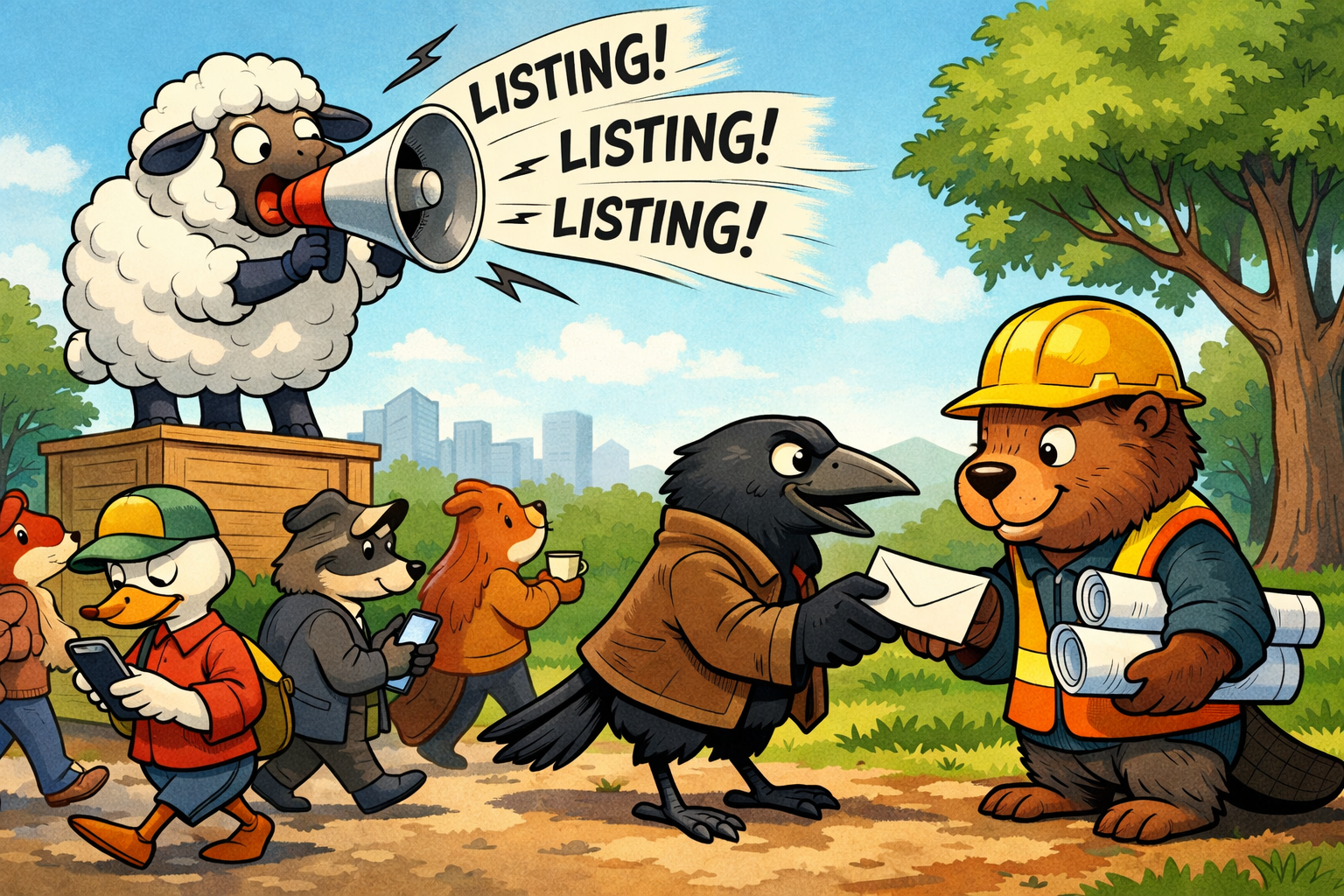
    If you ever talk to a real estate agent about listing a property, one word you’re guaranteed to hear is exposure. You’ll hear it over and over. Exposure, exposure, exposure. It doesn’t matter if it’s a house, a lot, or a piece of land. That’s the pitch.

    They’ll tell you it’s going in the MLS and pushed out to all the portal sites—Zillow, Redfin, Realtor.com. Maybe a couple of paid platforms. Maybe some email blasts. None of that is wrong. It should be done. Everybody does it. It’s the baseline.

    Where it starts to fall apart is when that’s the whole plan.

    A lot of agents take those listings and blast them out through the same systems. Big email lists, dozens of properties at a time. It looks like a lot of activity, but it’s mostly noise. I get those emails too. You can recognize them before you even open them, and 99% of the time it’s not something you’re looking for. Not a deal. Not relevant. So you skip it. I do the same thing.

    That’s the part nobody really wants to say out loud. Most of that “exposure” doesn’t actually get read. Not because it’s bad, just because it’s generic.

    You do need exposure, but more exposure isn’t always better. Better exposure is better.

    When I’ve got a lot or a tract to move, I’m not just thinking about where it gets posted. I’m thinking about who would actually care. Builders for finished lots. Developers for raw land. Groups that are already active in that specific area. The question is simple: who does this actually fit?

    Then I go straight to those people. Sometimes that’s an email. Sometimes it’s a call or a text. Sometimes it’s something in the mail. The method changes, but the goal doesn’t. Get it in front of someone who can actually do something with it.

    Over time, that turns into something most people don’t have. Not a generic “buyer list,” but a real group of people you can reach when it matters. People I’ve worked with, people I’ve talked to, or at least people I’ve made sure I can get in front of. Even the ones I haven’t done deals with yet usually know who I am, and that matters.

    That’s access.

    I’m not guessing who might be interested. I’m putting it in front of people who are already in the market, and just as important, they’ll actually open it. Not because it’s fancy, usually because it’s not. It doesn’t look automated and it doesn’t look like it went to 500 people. It looks like something I sent to them, because it is.

    If your message looks like everyone else’s, it gets treated like everyone else’s. Ignored.

    I’m not trying to impress anyone with marketing. I’m trying to get a response. Yes or no. Both are useful.

    Over time, familiarity builds. The people who matter recognize your name, so when something comes across from you, it doesn’t feel random. It feels relevant. That’s hard to fake, and it doesn’t happen overnight.

    Portals still have their place. I use them too. But if that’s all you’re relying on, you’re basically hoping someone stumbles across your property. I’d rather make sure the right people see it.

    If you’ve got a lot or a tract and want to know how it would actually be positioned, I’m happy to take a look. No pressure to list, just information.


    PS: If you’re a landowner, you might not even be thinking about selling currently.

    You may have it in your mind that you’ll never sell.

    All of that is great, but things change. And the best time to be gathering information is before you needed it by yesterday.

    Is it a bad idea to know what your property might realistically sell for today?

    That’s what the MBR Land Reality Check is for. It’s a straightforward look at potential value based on actual sales and other (often overlooked) factors that drive value.

    You don’t have to decide to sell. You should decide to know what you can.


    PPS: If you’re not ready for a reality check but like reading stuff like this, sign up below to get them in your inbox.

    Register to Receive Posts Via Email!

    By submitting, I understand I will receive marketing emails and blog posts from Mike Browning Realty and/or associated companies. Unsubscribe at any time.