Category: Uncategorized

  • Your Deal. Your Business.

    Your Deal. Your Business.

    Aside from the actual process of buying one, the worst part about purchasing a car may be hearing from everyone afterward that you paid too much. Or that you didn’t get enough for your trade.

    Or that you should have done it their way because you’d have gotten a better deal.

    It was for me, at least until I learned not to engage in that conversation in the first place. And if I can’t avoid it, I just ignore it.

    For one thing, I negotiate for a living. And given the size of my family, I’ve bought and sold way more cars than the average person. So while it’s possible that some random bystander could have squeezed out a significantly better deal, it’s highly unlikely.

    Mostly it’s just bluster. You know how people are.

    But more importantly, if I’m happy with the deal and decide to move forward, what difference does it make what someone else thinks?

    There’s no need to explain.

    It applies to real estate too. Just this week I got a call from someone an attorney friend had referred.

    Her neighbor had proposed swapping some land that would reduce her road frontage and increase her back-yard depth.

    On paper it sounded like a fair trade. But she worried the road frontage was worth more than what she’d get in return.

    I told her that, in a vacuum, road frontage is usually more valuable. But there are always other considerations. And in her case the difference might be negligible.

    She didn’t have a sketch or map to show me, so I couldn’t give a definitive opinion. But assuming she wasn’t making a clearly bad trade, I told her this:

    If you think your property is better off after the swap, do it. Don’t get paralyzed over a value difference that’s likely minimal.

    And if you don’t want to explain to neighbors why you didn’t demand money as part of the deal, don’t.

    It’s none of their business.

    In life and in business, you don’t owe most people an explanation.

    Your client, your wife, your boss—fine.

    But you don’t owe strangers a PowerPoint about your pricing, your timing, or your strategy.

    No matter what they say.

    My experience is that whenever someone offers you facts you didn’t ask for, it’s pretty smart to ignore it as it’s usually wrong.

    Is it ever a bad time to get real world data and advice from an expert in the field?

    Just click below if not:


  • Decide Slow. Act Fast.

    Decide Slow. Act Fast.

    Take your time deciding. But once you do, don’t mess around.

    Here’s an old riddle:

    Five frogs are sitting on a lily pad. One decides to jump off. How many are left?

    Most people say four. That’s good math, but the wrong answer.

    The answer is five.

    The one frog decided to jump off, but didn’t actually do it. He’s still sitting there, wondering why nothing’s changed. Why the thing he wants hasn’t happened yet.

    Presumably, he thought it through. He must’ve concluded that jumping off was the right move. But still, he just sat there.

    Why? Who knows. But he’s acting just like people do.

    They “decide” to do something, but not really. So they keep doing what they were already doing. And a year later, they look up and wonder why they’re still in the same place.

    Here’s what I’ve learned:

    There’s nothing wrong with being deliberate. I take all the time I need to think through decisions and look at the info.

    But once I decide, I stop thinking about it and just go.

    It’s not foolproof. But more often than not, it works out. And mentally, it’s cleaner.

    Now, I’m not saying you never change course. That would be stupid. But once you’ve decided to move, stop looking for reasons not to. Just start.

    If it’s wrong, reality will usually let you know fast. It’s good like that.

    So what does this have to do with real estate?

    Exactly what I said.

    If you’ve decided to sell or buy, get going right then. Move fast.

    Unless something obvious shows up that says otherwise, keep going.

    Do your homework. Ask questions. Take your time deciding.

    But once the decision’s made, move forward.

    You don’t have to decide today. But it never hurts to have the most current info on your side. That part’s easy.

    You know who to ask. If I’ve given you a valuation before and you want it updated, just ask.

    If you’ve never gotten one, hit the link below and get up to speed.

    Either way, don’t be the frog.


  • You Should Have Started Yesterday

    You Should Have Started Yesterday

    If you’re old enough to remember when the Cowboys were actually competing for (and winning) Super Bowls, you know their chief rival back then was the San Francisco 49ers. San Francisco had dominated the ’80s and was still a powerhouse as the Cowboys started their run.

    I recently watched part of a replay of the 1992 NFC Championship Game. That was the first year of Dallas’s run—though at the time, few expected them to win.

    The first thing that stood out was how different the broadcast looked. No constant score or clock on the screen. No yellow first-down line.

    Then I noticed something else which I had forgotten: the 49ers’ backup quarterback that day was Joe Montana. At the time, he was widely considered the best QB ever—especially in the postseason.

    But there he was, on the bench behind Steve Young.

    Montana had missed the 1991 season due to injury. And even though the old saying is you don’t lose your job to injury…that’s exactly what happened.

    When his contract expired, he went to Kansas City and proved he could still play.

    The 49ers’ philosophy was simple: it’s better to move on from a player a year too early than a year too late. In other words, the risk of inaction is often greater than the risk of premature action. They could always have gone back to Montana while he was still on the roster—but they didn’t need to.

    That mindset applies far beyond football.

    In business and in real estate, the best time to start moving is usually before you feel fully ready. That doesn’t mean you list your property tomorrow or buy by nightfall. It means you start gathering facts, testing assumptions, and taking first steps.

    If you own property, the smart approach is to get ahead of the curve. Learn what your land is worth today and what’s happening nearby.

    Is development headed your way? That’s usually good news for values—but sometimes it soaks up utility capacity and can slow or even block your ability to sell for top dollar until improvements catch up.

    You want to know that before you need to make a decision.

    Only you can decide when the time is right. But it rarely hurts to be a little aggressive.

    Waiting until everything feels perfect almost always produces worse results than starting sooner and adjusting as you go.

    Is it a bad time to get up to speed? Probably not.


  • Compared to What?

    Compared to What?

    2 Corinthians 10:12 says:

    “We do not dare to classify or compare ourselves with some who commend themselves.
    When they measure themselves by themselves and compare themselves with themselves, they are not wise.”

    We live in a world that practically runs on comparison.

    Your phone will show you in seconds how somebody else looks, what they earn, what they drive, where they go on vacation.

    Intellectually you know you’re comparing your everyday situation to someone else’s highlight reel. And you also know that what people let you see is often embellished, if not totally made up.

    But it still makes you feel less than a lot of the time.

    Paul’s words to the Corinthians cut right through that.

    He’s basically saying: if you want to use other people as your measuring stick, don’t expect it to lead to wisdom.

    It’s not that comparison is always wrong — we can learn from good examples.

    But most of the time, it turns into something else: either pride because you think you’re doing better, or discouragement because you think you’re behind.

    Both are distortions.

    God doesn’t hand out a single, uniform blueprint for everyone’s life.

    The gifts He gives, the doors He opens, the seasons He brings us through — they aren’t identical.

    Paul himself planted churches in one place while others planted somewhere else.

    Peter’s path didn’t look like Paul’s. Neither needed to live up to the other’s assignment.

    When we keep score against each other, we start asking the wrong questions.

    “Why don’t I have what they have?”
    “Am I as successful as they are?”
    “Am I falling behind?”

    But the real question is: am I being faithful with what I’ve been given, right where I am?

    One of the subtle dangers of comparison is that it shifts your attention away from what God has actually put in your hands.

    Or from starting at all — because you feel as if your small start can’t measure up to someone else’s finish.

    Paul’s alternative is simple but demanding: let God set the standard.

    Measure yourself against His calling for you — not against someone else’s results.

    If you do that, you’ll find both humility and courage. Humility, because the standard isn’t other people’s applause. Courage, because you realize you don’t have to run somebody else’s race.

    The world keeps telling us we’re behind.

    Scripture says otherwise.

    You can’t be behind in a race that God set out specifically for you.

    So the next time you feel that tug to size yourself up against someone else, remember Paul’s words: it’s not wise.

    Better to look at your own work before God — and keep going.

    ***I’ve said the last few weeks it’s wise to keep a physical copy of the Bible.

    Reading or listening electronically is great—until the power or the connection goes out.

    Will that happen? Maybe not. Could it? Sure.

    It’s a risk you can remove easily and cheaply.

    Disclosure: As an Amazon Associate I earn from qualifying purchases. If you buy something—anything—after clicking that link, I may receive a small commission. It doesn’t change your price.

  • It Ain’t Gonna Act On Itself

    It Ain’t Gonna Act On Itself

    When I first started in the land business, I worked with my dad. On my wall right now there’s an old black-and-white aerial of the Celina/Prosper area that he kept back then—right next to a shiny new one.

    I spent hours researching ownerships and mailing letters to the owners. Finding phone numbers for those old entities was tough, but I’ve always found writing works better for me anyway.

    One of the responses I got was from a guy who said he wasn’t ready to sell yet but might be soon.

    My dad kept telling me to follow up.

    I kept saying the time wasn’t right—I didn’t want to pester the guy.

    (If stubbornness counts as a super-power, that’s mine.)

    Then one day after lunch I just had the idea it was time to call. So I did.

    Turned out the thing the owner had been waiting on was finished that very morning.

    He gave me pricing on all three of his tracts. I called a buyer and sold them.

    Dad said I got lucky.

    Maybe I did. But here’s the thing: I had the idea—and I acted. Right then.

    You don’t need all good ones. Most will be duds. But the practice keeps your mind working and gets you closer to the one that matters.

    Here’s the catch: the best idea in the world is worthless until you act on it.

    Every building you see started as an idea in a developer’s head. But it didn’t stop there. He went out, bought the land, got plans drawn, found financing, built it.

    And it wasn’t smooth. Nothing worth doing ever is. It just looks that way to the observer.

    The difference between most people and that developer is simple: he acted—before he had all the details figured out. You can’t know every step in advance, especially the first time you try something new.

    What you can do is put together the best plan you can today—and take the first step. Do something every day that moves it forward.

    As you go, you’ll find things that need adjusting. You’ll hit snags you didn’t foresee. You adjust, you keep going.

    That’s how the idea turns into a result. And often, the final result is better than what you first imagined—because you kept improving it along the way.

    ***You probably aren’t ready to sell your land today. But one day you might decide the time is right, and it will be time to act.

    It will be much easier if you’ve been staying abreast of things ahead of time.

    Is there ever a bad time to get an expert in your corner so you’re ready when it’s time?

    You can do that below.


  • Why Didn’t I Think Of That

    Why Didn’t I Think Of That

    Everything you see or hear started as an idea.

    Every building, every business, every TV show, every song.

    Before it existed, it was just in someone’s head.

    We tend to assume the people who create these things are smarter, or their ideas come out more fully formed. The truth is, they understand the process — and they act on it.

    Earl Nightingale had a simple challenge: write down twenty ideas every single day.

    Not three or five — twenty.

    Not that they will all be great. Most won’t even be good. Especially at first.

    A few will be half-baked.

    That’s fine. The point is to keep the ideas coming.

    You only need one good idea to change your life. The law of averages says the more ideas you come up with, the better your odds. Plus with practice, you get better at it.

    Here’s what most people miss: the “bad” ideas aren’t wasted.

    They drop into your subconscious, which keeps working even when you’re not aware of it.

    That’s often where the spark comes from — a scrap of a thought you dismissed last week ends up being the missing piece to a bigger puzzle.

    All you know is you’re thinking about something, have a flash, and now you’ve got the answer.

    But it wouldn’t have happened nearly as fast — if at all — without all those “bad” ideas you tossed aside.

    I challenge you to try it for a month. If you can’t hit twenty at first, do what you can.

    If it doesn’t help, you can always go back to the old way.

    But I’d bet it does.

    This doesn’t have much to do with real estate directly.

    But it’s improved my marketing and how I run my business, which makes a difference everywhere.

    When you’re ready for help with real estate, I’m here.

    If you’d like to read more from Nightingale, I recommend his book Lead the Field.

    You can buy it on Amazon here:

    Disclosure: As an Amazon Associate I earn from qualifying purchases. That means if you buy something — anything — after clicking that link, I may receive a small commission. It doesn’t change your price.

  • Straight Shooter

    Straight Shooter

    (Bonus points to the first person who tells me why he’s shooting a sling shot….)

    A broker I’d been emailing with about one of his listings called me a couple days ago.

    At first he said he was checking to see if my clients wanted to make an offer on his listing. We still might.

    But one of the tough things about working with smart land investors is they know you make your money when you buy, not when you sell.

    They’re not going to buy every deal—or even most of them.

    They buy one or two at a time. That means they have to be really good deals: priced below today’s market with a story for why the value will climb.

    Those aren’t easy to find. And if you’re not careful, you can upset sellers with offers they see as unreasonably low. So you have to go slow.

    Turns out that wasn’t the real reason he called.

    He wanted to pick my brain about working with developers and builders.

    Said he’d been reading my blog and thought I seemed like a straight shooter.

    That made my day. Not because it stroked my ego (though it did), but because that’s exactly why I write this stuff.

    I didn’t start writing as some long-term diary. I started it as a way to reach more landowners, builders, and even other brokers—people who have decisions to make and don’t always get real information.

    It’s marketing, sure.

    But good marketing should be useful.

    If I can explain something clearly enough that a reader feels a little less overwhelmed, then I’ve done my job.

    A lot of real-estate marketing is designed to impress: shiny flyers, fancy videos, slick slogans. Nothing wrong with presentation, but style without substance doesn’t help anyone make a better decision.

    Land deals have too many moving parts for that.

    It matters to understand access, utilities, comps, timing.

    It matters to be honest about when a piece—or a person—isn’t the right fit.

    That’s the kind of thing I try to put in the blog.

    This broker didn’t call because I had the flashiest site.

    He called because, after reading a handful of posts, he decided I might be worth talking to.

    That’s the point of putting your knowledge out there. You’re not just chasing the next lead. You’re building credibility.

    And credibility doesn’t come from hype—it comes from being consistent and explaining the hard parts as well as the easy ones.

    When someone you’ve never met picks up the phone because they believe you’ll give them a straight answer, the marketing has done what it’s supposed to do.

    That call was a good reminder for me: keep writing, keep explaining, keep being candid.

    The right people are reading—even if you don’t know it until they reach out.

    If you have lots or land, you probably have questions about where things stand today.

    Is there ever a bad time to start talking to someone who’ll point you in the right direction without pressuring you?

    You know what to do:


  • Don’t Put on a Show

    Don’t Put on a Show

    I’ve written before about how people make decisions emotionally, then come up with “reasons” afterward.

    Most of us understand this—about “other people.”

    When the stakes feel big, we drag out the charade. Take buying a car.

    Most buyers know pretty early which one they want.

    But they’ll still go test-drive three other models, as if the choice is still up in the air. It makes them feel rational and thorough, even though the decision was made in the first hour.

    But it wastes the time of those salesmen, which isn’t right. Not to mention most people don’t like dealing with car salesmen, so why subject yourself to more of that than you need to?

    Hiring is the same.

    My daughter had a second interview lined up this week. A few hours before, the company called to say they’d decided to hire someone else.

    Not fun to hear, but it saved her a trip and a pointless conversation.

    A lot of companies would have gone ahead with the meeting just to look like they were “following procedure.” This company didn’t, and I respect them for it.

    As it turned out, it worked out better for her anyway. Another company called a few minutes later and offered her a better job.

    Real estate is no different.

    A seller will line up three or four brokers, invite us out, and have us give our pitch. But most of the time, the seller already knows who they’re going to hire.

    The presentations just make them feel like they’re being diligent.

    That’s understandable, although selling land isn’t the same as selling a house.

    The rules of the game are different — from pricing and access, to how you market it, to how you negotiate.

    You want someone who plays that game every day, not just someone who’s good at selling houses. Although you may just have to use her anyway. So just do it.

    I try to get to the truth early.

    By asking the right questions, I can usually tell if I’m the Favorite—the one they really want to hire—or the Fool—the one they’re just talking to because they think they should.

    If I’m the Fool, I stop chasing.

    That saves me time and spares them the awkward “we went another direction” call later.

    Sounds callous, but it helps everyone.

    It cuts down on the wasted meetings and long sales pitches.

    It takes some of the stress out of the process for the seller too. They don’t have to pretend to be undecided just to feel like they’ve done their homework.

    Is it perfect? No. Can you ever “win” a listing if they were set on someone else? Sometimes.

    But the time saved, the reduced angst on both sides—that’s worth a lot.

    The truth is, most of us decide faster than we admit.

    There’s no shame in that.

    The trick is to recognize it and move forward, instead of staging a show for appearances.

  • The Best Corner Left Standing

    The Best Corner Left Standing

    Some of the best pad sites along George Bush Freeway have already been spoken for.

    If you’re looking for the best remaining opportunity—this is it.

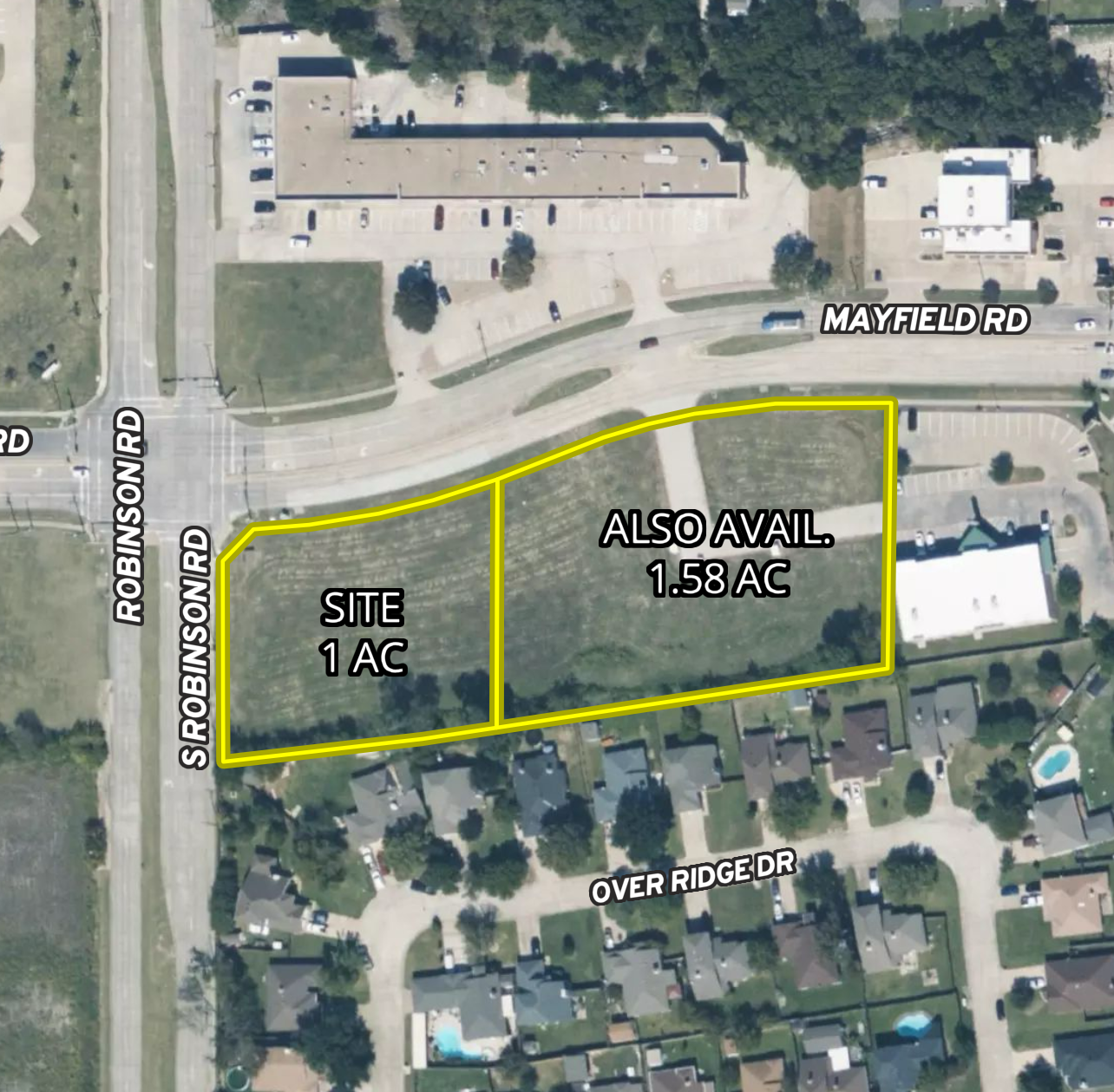
    This 2.58-acre hard-corner tract sits at the signalized intersection of Mayfield & Robinson in Grand Prairie.

    It’s right across Robinson from the new BJ’s Wholesale (opening 2026) and shadow-anchored by IKEA, which is already drawing about 2 million visitors a year.

    More traffic is coming: Academy Sports is on the way, and the area already has regional magnets like TopGolf, Andretti Karting, and Bass Pro.

    There’s also a wave of new multifamily development nearby—more rooftops to feed the retailers.

    Access is excellent: there’s a full median break on Mayfield with left-turn access.

    The site is zoned PD-152a, under the General Retail category (with some use restrictions), and utilities are in place.

    It’s available for sale or ground lease.

    Can divide if needed.

    For partial sales or ground leases, I can quote pricing based on size and location.

    It would make a terrific car-wash site (I know by the number of inquiries I get from those developers)—unfortunately the zoning doesn’t allow it.

    Gas sales would require a special-use permit, and so far the city hasn’t been inclined to approve it (BJ’s will have fuel across the street).

    This is premium exposure—the best corner still available—right in the heart of one of the fastest-growing commercial areas in the Metroplex.

    Zoning Ordinance/Survey also available, email me for that.

    ***All information provided is believed to be accurate but is not guaranteed. Buyers and lessees should conduct their own due diligence and verify all facts, measurements, zoning, and other details to their own satisfaction before making any purchase or lease decisions.***

  • Don’t Confuse Empathy with Sympathy

    Don’t Confuse Empathy with Sympathy

    Most people use the words “empathy” and “sympathy” as if they mean the same thing. They don’t. And getting them mixed up can cost you in a negotiation.

    In Never Split the Difference, Chris Voss, a former FBI hostage negotiator, talks about a concept called tactical empathy.

    It’s not about being nice. It’s about showing the other side you truly understand what’s going on in their head.

    Jim Camp taught the same principle in a different way: before you have any right to your own opinion, you have to earn it by proving you understand the other person’s world.

    Empathy is recognizing and acknowledging someone else’s feelings or point of view. You don’t have to agree with them, and you don’t have to feel the same emotion yourself.

    When you say, “It sounds like you’re frustrated with how long this process has taken,” you’re showing empathy. You’ve named what they’re feeling. That lowers their guard.

    The great part is even if you don’t get it right initially it doesn’t hurt anything. They will continue to explain and give you more insight.

    Sympathy is feeling sorry for someone’s situation. It’s your own emotional reaction to what they’re going through. Saying, “I’m really sorry this is happening to you,” is sympathy. It can be kind in personal life, but in a business discussion it often shifts the focus from their issue to your feelings about it.

    Empathy makes things about the other person. Sympathy makes it about you (while acting like it’s about them).

    In negotiation—whether you’re selling a piece of land, buying a home, or haggling over repairs—empathy opens doors, sympathy closes them.

    Empathy tells the other side, “I get you. I hear you.”

    That makes them feel safe enough to keep talking, which often leads them to reveal their real concerns. That’s when you can find a solution that works.

    Voss says a good sign you’re really in your counterpart’s world is when they respond to your summary of their position with, “That’s right.” It means they feel heard and understood.

    Contrast that with when someone says, “You’re right.” That often means they’re trying to brush you off, end the conversation, or placate you without actually being convinced.

    “That’s right” is a green light. “You’re right” is usually a red light.

    Your job early in a negotiation is not to push your proposal but to draw out their thinking, then summarize it so accurately that they say, “That’s right.” Until you get there, they’re still guarding their position. When they finally say it, they lower their guard and you can start exploring solutions together.

    For example, when a landowner says, “I don’t want to sell for less than my neighbor got,” you might respond, “It sounds like you’re worried you’ll leave money on the table.” If they reply, “That’s right,” you’ve nailed their core concern. From there, you can talk about the real differences between the properties. If they just say, “You’re right,” they probably still feel misunderstood and you’re not ready to move on.

    Empathy isn’t about giving in or feeling sorry for someone. It’s about understanding them well enough that they’ll work with you.

    That’s more valuable than any clever sales pitch. And it’s a skill anyone can practice: listen more, talk less, and aim for the moment when they nod and say, “That’s right.”

    ***Want to dig deeper into the skills that help you earn the “That’s right” moment?

    I highly recommend reading Never Split the Difference by Chris Voss.


    (Yes, if you use this link I earn a small commission, but it doesn’t change your price.)